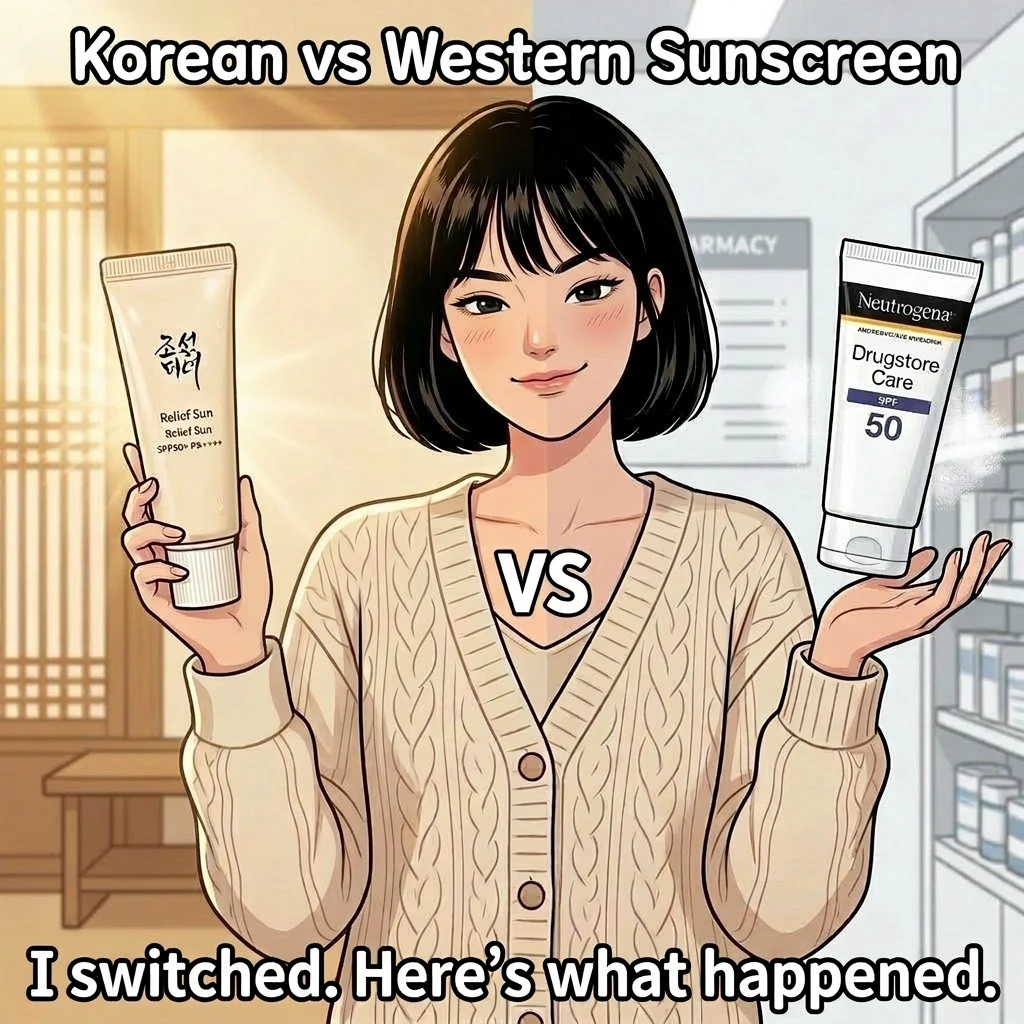
Korean vs Western Sunscreen: The Bottom Line
Korean sunscreen wins for daily wear - better texture, zero white cast, and it sits under makeup like a primer. Western sunscreen still wins for the beach, the pool, and serious outdoor sports. That's it. That's the post. But if you want the full breakdown of why I ditched my Neutrogena for Beauty of Joseon and never looked back (mostly), keep reading.
Korean Sunscreen vs Western Sunscreen: Quick Verdict
Korean Sunscreen (like Beauty of Joseon Relief Sun)
✔ Best for: Daily commute, under makeup, oily skin, no white cast
✔ Best for: People who want to reapply during the day
✘ Avoid if: You need serious water resistance for surfing/swimming
✘ Avoid if: You want FDA-regulated SPF claims
Western Sunscreen (like Neutrogena Ultra Sheer SPF 70)
✔ Best for: Beach days, outdoor sports, water activities
✔ Best for: When you need FDA-tested water resistance ratings
✘ Avoid if: You hate the greasy, heavy sunscreen feeling
✘ Avoid if: You have deeper skin and can't deal with white cast
Korean Sunscreen vs Western Sunscreen: Feature Comparison
| Feature | Korean Sunscreen | Western Sunscreen |
|---|---|---|
| White Cast | ★★★★★ None | ★★☆☆☆ Often visible |
| Finish | ★★★★★ Dewy/matte options | ★★★☆☆ Often greasy |
| Water Resistance | ★★★☆☆ Moderate | ★★★★★ Sport-grade |
| Ingredient Innovation | ★★★★★ Next-gen UV filters | ★★★☆☆ Limited by FDA |
| Daily Wearability | ★★★★★ ✔ | ★★☆☆☆ ✘ |
| Reapplication Ease | ★★★★☆ ✔ | ★★☆☆☆ ✘ |
Korean vs Western Sunscreen: UV Filter Breakdown (The Real Reason They Feel Different)
This is the part most blogs skip - but it's the actual answer to why Korean sunscreen feels so different. It comes down to UV filter technology, and the gap between Korean/EU formulas and American ones is huge.
Korean & European UV Filters
| Filter | Type | What It Does |
|---|---|---|
| Tinosorb S | Chemical | Broad-spectrum UVA/UVB, highly photostable, light feel |
| Tinosorb M | Hybrid | UVA specialist, no white cast unlike zinc oxide |
| Uvinul A Plus | Chemical | Deep UVA protection, extremely photostable |
| Mexoryl SX/XL | Chemical | UVA powerhouse, used widely in Korean/EU brands |
Western (FDA-Approved) UV Filters
| Filter | Type | Limitations |
|---|---|---|
| Avobenzone | Chemical | Degrades in sunlight (needs stabilizers), can feel heavy |
| Oxybenzone | Chemical | Banned in Hawaii (reef damage), EWG concern rating |
| Zinc Oxide | Mineral | Effective but causes white cast on deeper skin tones |
| Homosalate | Chemical | Photostability questions, requires higher concentrations |
Bottom line: The FDA approved its last new UV filter in 1999. Korean and European brands have been using next-gen filters for 20+ years that require lower concentrations for equal protection - which is exactly why Korean SPF feels lighter. This isn't marketing. It's chemistry.
If you're looking at a Korean sunscreen and wondering why it works with less product and feels like nothing: Tinosorb S at 3% does what avobenzone does at 3-5%, and it does it more elegantly. Less active ingredient, lighter formula, same (or better) protection.
That's why a Beauty of Joseon Relief Sun can feel like a lightweight moisturizer while a Neutrogena Ultra Sheer SPF 70 still feels like... sunscreen.
And then there's the PA rating system. Korean sunscreens use the PA++++ rating to measure UVA protection - the rays that cause aging, hyperpigmentation, and long-term skin damage. Western sunscreens? The FDA uses "broad spectrum" which is basically a pass/fail label. PA++++ tells you the sunscreen blocks over 95% of UVA rays. "Broad spectrum" tells you it blocks... some. The difference in transparency is wild.
If you're building a full Korean skincare routine, sunscreen is the last and most important step. Korean brands know this, which is why they formulate SPF to work with your skincare, not against it.
Korean vs Western Sunscreen: White Cast Comparison
Western sunscreen has a white cast problem that Korean brands solved years ago. I'm just going to say it.
Most Western mineral sunscreens use zinc oxide and titanium dioxide as their active UV filters. These are physical blockers - they sit on top of your skin and reflect UV rays. The problem? They're white minerals. On anyone darker than paper, you're going to look ashy. Even "sheer" Western mineral sunscreens leave a visible cast on medium to deep skin tones.
Korean sunscreens largely avoid this problem because they use chemical UV filters (or hybrid formulas with micronized physical filters) that absorb into the skin instead of sitting on top. The Beauty of Joseon Relief Sun is a perfect example - it goes on completely clear on every skin tone I've seen it tested on.
Even higher-end Western options like Supergoop! Unseen Sunscreen SPF 40 had to go fully chemical to solve the white cast issue. And that formula costs significantly more than most Korean options that figured this out ages ago.
I've tested probably 30+ sunscreens at this point across Korean and Western brands. The white cast issue is consistent: Western mineral sunscreens almost always leave some level of cast, especially on medium to deep skin tones. Korean chemical sunscreens almost never do. Western chemical sunscreens are hit or miss - some are okay, others still leave a slight grey tint. If you have deeper skin and have been struggling to find a sunscreen that doesn't change your skin tone, Korean sunscreen is the answer. Full stop.
If white cast has been your excuse for not wearing sunscreen daily, Korean sunscreen removes that excuse entirely.
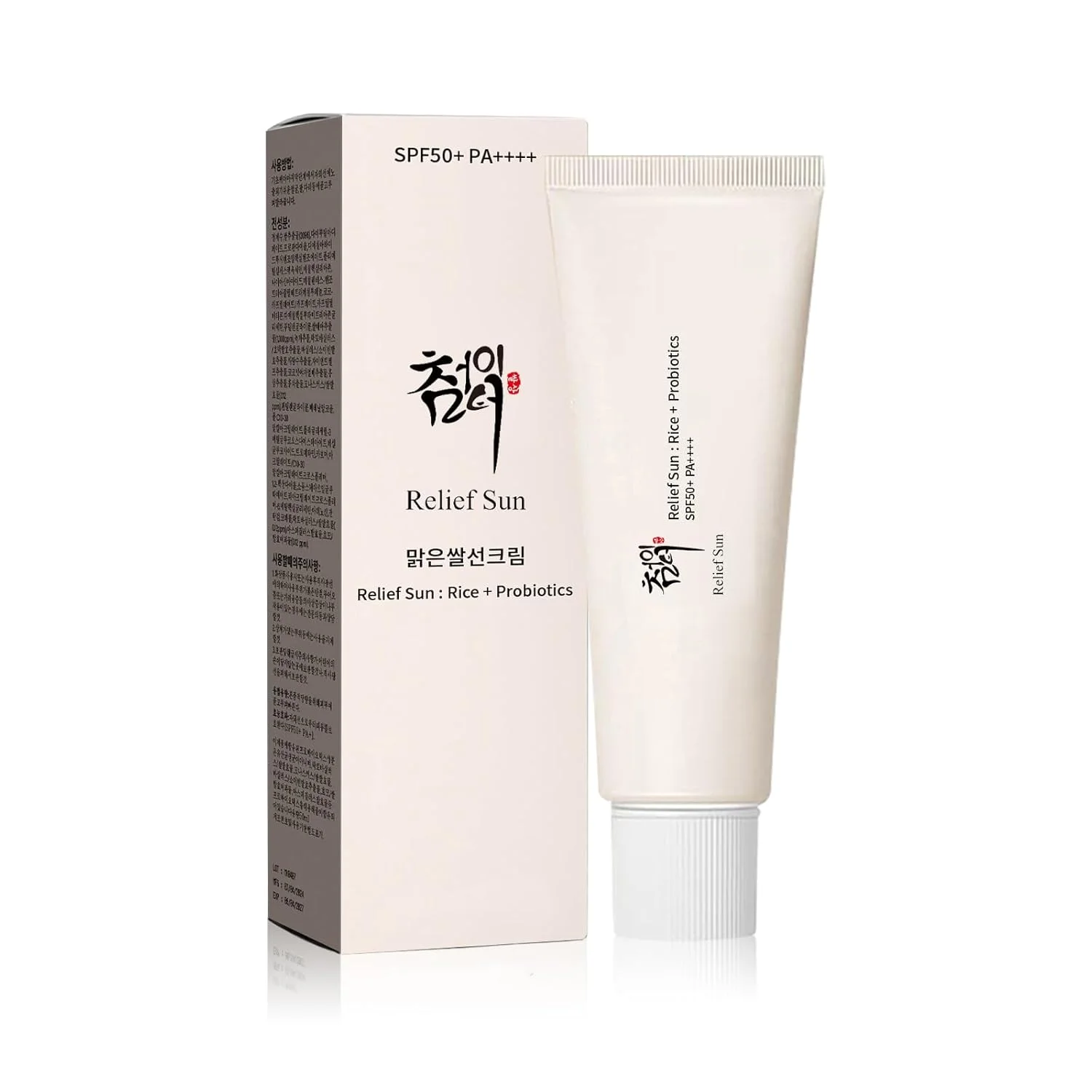
Beauty of Joseon Relief Sun SPF50+ PA++++ - Check on Amazon →
Korean vs Western Sunscreen for Oily Skin: Why K-Beauty Wins
I have oily, acne-prone skin. For years, sunscreen was my worst enemy. Every Western sunscreen I tried turned my face into a slip-n-slide by noon. The greasy finish, the pilling when layered over moisturizer, the way it seemed to attract more oil throughout the day - I hated it.
Then I tried Korean sunscreen and honestly felt stupid for waiting so long.
Korean sunscreen formulas are designed to work within a multi-step skincare routine. They're meant to go over toner, essence, serum, and moisturizer without balling up or sliding off. That's a completely different engineering challenge than what Western brands are solving for, and it shows in the texture.
The Beauty of Joseon Relief Sun dries down to a semi-matte, almost velvety finish. It controls oil better than some primers I've used. If you're dealing with oily skin and want a full routine built for it, check out my Korean skincare routine for oily skin - sunscreen is the final step and it needs to play nice with everything underneath.
Western sunscreens are getting better at this - Supergoop! Unseen Sunscreen has a nice matte finish - but the average drugstore Western SPF is still way too greasy for oily skin types. And here's the frustrating part: the Western sunscreens that DO have good textures tend to be premium-priced. Korean sunscreens give you that same elegant finish at a fraction of the cost. The value proposition isn't even close.
If you're dealing with oily skin and acne, the sunscreen you choose matters even more because heavy, pore-clogging formulas can trigger breakouts. Most Korean sunscreens are formulated to be non-comedogenic and lightweight enough that they won't aggravate acne-prone skin. I wish someone had told me this five years ago.
View Neutrogena Ultra Sheer SPF 70 on Amazon →
Korean vs Western Sunscreen for Outdoor Use: When Western Wins
Okay, I'm not going to pretend Korean sunscreen is perfect for everything. If you're going surfing, doing a full day hike, or spending 6 hours at a water park, Western sunscreen is still the move.
Western sport sunscreens like Neutrogena Ultra Sheer SPF 70 are formulated for water resistance in ways that most Korean sunscreens simply aren't. The FDA requires specific water resistance testing (80 minutes of water immersion), and Western sport sunscreens are built to pass those tests. Korean sunscreens tend to prioritize elegance over tenacity - which is great for daily life but not great when you're sweating through a summer run.
The elegant, lightweight texture that makes Korean SPF so great for daily wear is a disadvantage in extreme conditions. You want that thick, almost sticky adherence when you're in the ocean. Nobody cares about cosmetic elegance at the beach.
There's also the SPF number game. Western brands go up to SPF 100+ (like the Neutrogena Ultra Sheer SPF 70), while most Korean sunscreens cap at SPF 50+. For extreme sun exposure - think high altitude, tropical beaches, snow reflection - that extra SPF buffer can matter. Is the real-world difference between SPF 50 and SPF 100 huge? Not really (97% vs 99% UVB blocking). But when you're in intense conditions and might not reapply perfectly, higher SPF gives you more margin for error.
My approach: Korean sunscreen Monday through Friday, Western sport sunscreen for weekend outdoor activities. Simple.
Korean vs Western Sunscreen for Daily Wear: Under Makeup Comparison
This one isn't even close. Korean sunscreen was designed to go under makeup. It's the final step of the Korean skincare routine before makeup, and it's formulated accordingly.
Most Korean sunscreens dry down smooth and slightly tacky - which is perfect because it gives your foundation something to grip onto. It's basically a primer that also protects you from UV damage. Western sunscreens, especially mineral ones, tend to create a chalky or greasy layer that makes foundation apply unevenly or pill up.
I've been using the Beauty of Joseon Relief Sun under my makeup for months now and my base hasn't looked this smooth since... honestly ever. If you're comparing it to other Korean sunscreen options, I did a deep dive on Round Lab vs Beauty of Joseon sunscreen that might help you pick.
Korean vs Western Sunscreen: Regulation Differences (FDA vs KFDS Explained)
Here's the thing a lot of people don't realize: in the US, sunscreen is classified as an OTC drug. In Korea and the EU, sunscreen is a cosmetic. That single regulatory difference explains basically everything.
US (FDA): Sunscreen = OTC drug → requires drug approval process → takes 10-20 years to add new UV filters → last approved filter: 1999.
Korea/EU: Sunscreen = cosmetic → faster ingredient approval process → brands can adopt new UV filters within a few years of development → filters like Tinosorb approved in EU in the early 2000s, widely used in Korean products for 15+ years.
The result: Korean and European brands have had access to 10+ UV filters that aren't available in US-formulated sunscreens. These filters are safer, more photostable, lighter-feeling, and require lower concentrations to hit the same SPF level.
Is Korean sunscreen safe? The UV filters in Korean sunscreens are approved by Korea's MFDS, the EU's scientific committee on consumer safety (SCCS), Japan's PMDA, and Australia's TGA - some of the most rigorous cosmetic regulatory bodies in the world. Tinosorb S has 20+ years of safety data in Europe. Uvinul A Plus has been studied extensively. The filters haven't been reviewed by the FDA, but that's about regulatory bandwidth, not safety concerns.
If anything, some commonly-used Western UV filters raise more concerns. Oxybenzone is banned in Hawaii and Palau due to coral reef damage. Homosalate has shown potential endocrine disruption signals in some studies. These are the "safe" FDA-approved ingredients. The Korean alternatives you're worried about have cleaner safety profiles.
A dermatologist quote worth reading: Dr. Sandy Skotnicki, co-author of Beyond Soap, has publicly called out the FDA's sunscreen innovation bottleneck, stating that American consumers are being denied access to superior sun protection technology that's been used safely in other countries for decades.
What Reddit Says About Korean vs Western Sunscreen
If you spend any time on skincare Reddit, you already know the consensus. But let me pull some receipts:
r/AsianBeauty is basically a Korean sunscreen fan club at this point. The most upvoted sunscreen posts are almost always about Korean or Japanese SPFs. A recurring theme: "I can't go back to Western sunscreen after trying Asian ones." One highly upvoted comment put it perfectly: "Western sunscreen feels like a punishment for trying to protect your skin."
r/SkincareAddiction has shifted hard toward Korean sunscreens over the past few years. Even users who were ride-or-die for Western brands started making the switch after trying one Korean SPF. The Beauty of Joseon Relief Sun comes up in basically every "best sunscreen" thread.
The white cast conversation is everywhere on Reddit. Users with deeper skin tones consistently say Korean sunscreens are the first SPFs they've found that work without making them look grey. The phrase "invisible on my skin" shows up constantly in Korean sunscreen reviews.
The texture conversation dominates: "Why does nobody talk about how Korean sunscreen feels like skincare and Western sunscreen feels like paint?" is basically a weekly post at this point. Users consistently mention that the switch to Korean SPF made them enjoy applying sunscreen - which means they wear it more consistently, which means better skin outcomes overall. The compliance factor is real and underrated.
The one criticism Reddit agrees on: Korean sunscreens aren't as water-resistant. Multiple threads warn that if you're swimming or doing heavy outdoor exercise, you should go with a Western sport formula. This is honest advice and I agree with it.
For people getting into Korean skincare from scratch, Reddit consistently recommends starting with sunscreen and cleanser. Makes sense - check out the CosRX vs CeraVe cleanser comparison for the cleanser side of that equation.
Research backs this up: a 2019 study published in the Journal of Investigative Dermatology found that Tinosorb S maintained 95%+ of its protective capacity after UV exposure, while avobenzone (the most common Western UVA filter) degraded to 45% of its original capacity within 2 hours of UV exposure. Photostability isn't just a marketing word - it means your sunscreen is still working at hour 2, not just hour 0.
Korean vs Western Sunscreen: My 3-Month Switch Diary
ngl, I used SPF 50 drugstore sunscreen for years and thought I was fine. My skin was "protected" but it always looked greasy by lunch, my makeup would slide around, and I dreaded reapplying because it meant basically redoing my entire face. So I treated sunscreen as a "morning only" thing and hoped for the best.
Then I tried Korean sunscreen and everything changed. Here's my actual timeline:
Week 1: Immediately noticed the texture difference. The Beauty of Joseon Relief Sun felt like putting on a lightweight moisturizer, not sunscreen. My makeup went on smoother. I reapplied at lunch for the first time in my life because it was so easy.
Month 1: My skin looked... better? Like visibly better. Turns out when you reapply sunscreen because it doesn't feel disgusting, your skin gets more consistent UV protection. The dark spots on my cheeks started to fade. My texture evened out. I was shook.
Month 3: I became that person who evangelizes Korean sunscreen to everyone. My mom, my coworkers, random strangers in the skincare aisle at Target. I had fully converted and there was no going back. The only time I reached for my old Neutrogena was for a beach trip - and honestly, even then I used Korean SPF on my face and Western SPF on my body.
Choose Korean or Western Sunscreen: Decision Guide
✅ Choose Korean Sunscreen If:
- You wear it under makeup daily
- You have oily or acne-prone skin
- White cast has been your excuse for skipping SPF
- You want to enjoy your sunscreen routine
- You have medium to deep skin tones
- You're building a full Korean skincare routine
- You want next-gen UV filter technology
✅ Choose Western Sunscreen If:
- You're going to the beach, pool, or water park
- You're an outdoor athlete (hiking, surfing, cycling)
- You need FDA-regulated water resistance ratings
- You want reef-safe mineral protection for snorkeling
- You can't order online and need it at Target or CVS
- You prefer SPF 75-100 for extreme sun exposure
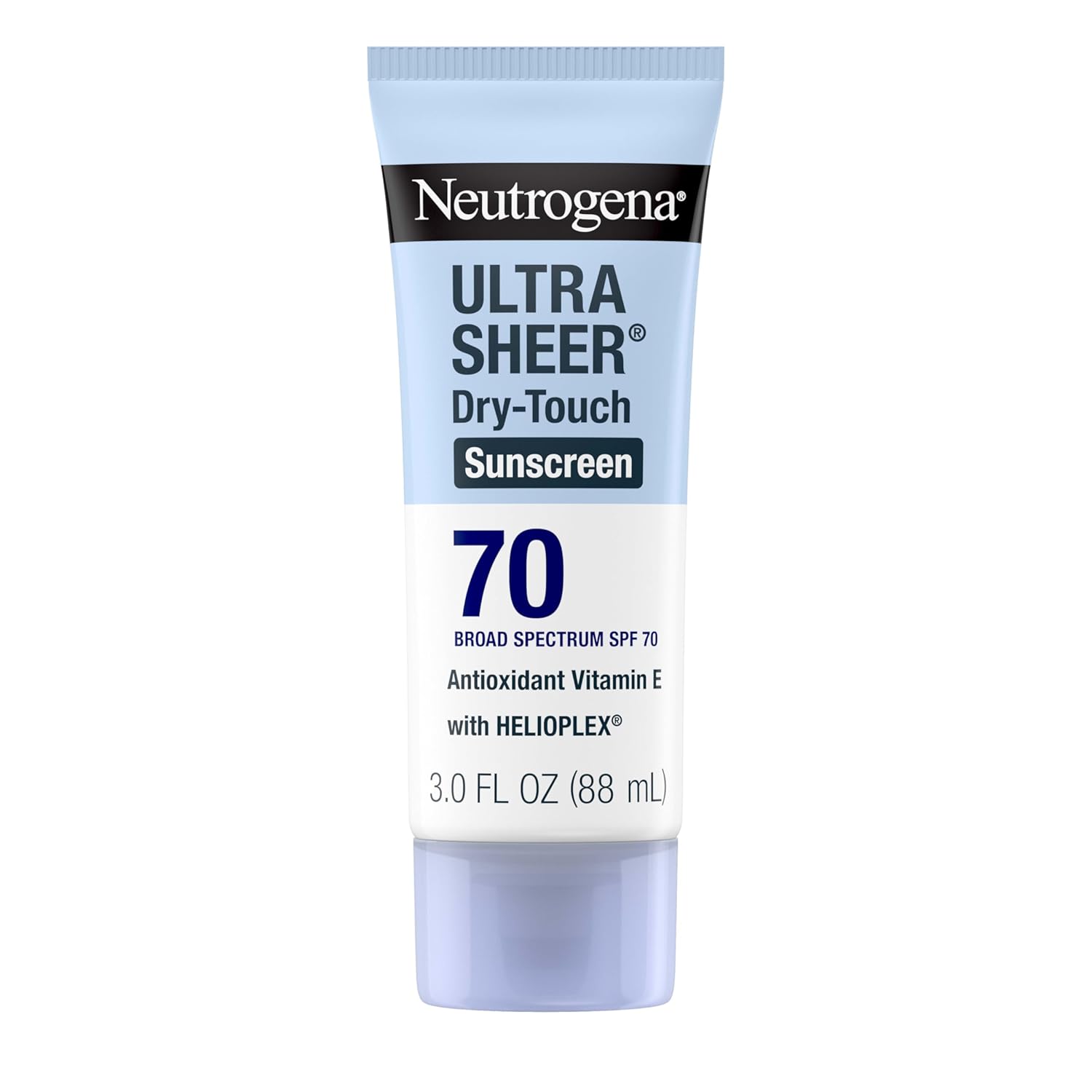
Neutrogena Ultra Sheer Dry-Touch Sunscreen SPF 70 - Check on Amazon →
The honest answer for most people: use Korean sunscreen on your face every day, and keep a Western sport SPF for the weekends when you're outside for hours. That's what I do.
Honest Cons of Korean Sunscreen
Because I keep it real on this blog, here are the actual downsides of Korean sunscreen that nobody wants to talk about:
Water resistance is genuinely weaker. I've said it multiple times in this post because it matters. Most Korean sunscreens aren't formulated for extended water exposure. If you're sweating heavily or swimming, you need to reapply way more often - or just use a Western sport SPF.
Availability in the US can be annoying. You're mostly ordering from Amazon, YesStyle, or Olive Young. Some Korean sunscreens show up at Ulta or Target now, but the selection is limited. You can't just grab it when you run out.
Reapplying over makeup is still tricky. Yes, Korean sunscreen is easier to reapply than Western SPF, but let's be honest - reapplying any sunscreen over a full face of makeup is inconvenient. Cushion compacts with SPF help, but it's not a perfect solution.
Some formulas pill. Not all Korean sunscreens are created equal. Some cheaper options pill over certain moisturizers or don't play well with silicone-heavy primers. You have to find the right combo for your routine.
Smaller tubes. Korean sunscreens typically come in 50ml tubes vs the 88ml+ bottles you get with Western brands. You go through them faster if you're applying the proper amount (and you should be). This is probably the most annoying practical issue - you'll be reordering more frequently, which means planning ahead and keeping backups. Not a dealbreaker, but worth knowing.
SPF testing methodology differences. Korean SPF testing follows ISO standards, which are well-regarded internationally, but they're not identical to FDA testing. Some dermatologists have raised questions about whether SPF 50+ in a Korean product provides identical protection to SPF 50 in an American product. The consensus is that they're comparable, but it's a fair point that comes up in the debate.
Top Korean Sunscreens to Start With
If this post convinced you to make the switch, don't just grab any random Korean SPF. I wrote a full guide on the best Korean sunscreens in 2026 with detailed reviews of each one.
But if you want a quick answer: start with the Beauty of Joseon Relief Sun. It's the one that converted me, it's the one Reddit loves, and it works for basically every skin type. It's the gateway drug of Korean sunscreen.
Korean vs Western Sunscreen: Final Verdict
I've been testing sunscreens for years and my conclusion is pretty simple: Korean sunscreen is better for 90% of your life. The daily commute, the office, under makeup, running errands, walking the dog - Korean SPF wins all of these scenarios by a landslide. The texture is better, the finish is better, the ingredients are more advanced, and there's zero white cast.
Western sunscreen gets the remaining 10% - beach days, pool parties, outdoor sports, and any time serious water resistance matters.
If you're still using a greasy Western SPF for daily wear and wondering why you hate sunscreen, do yourself a favor and try one Korean sunscreen. Just one. I promise you won't go back. Start with the Beauty of Joseon Relief Sun and thank me later.
Korean vs Western Sunscreen FAQ
Is Korean sunscreen better than Western sunscreen?
For daily wear, yes. Korean sunscreen uses more advanced UV filters, has better textures, and zero white cast. Western sunscreen is still better for water sports and extreme outdoor activities where water resistance matters most.
Why does Korean sunscreen feel so different from American sunscreen?
Korean sunscreens have access to newer UV filters (like Tinosorb and Uvinul) that the FDA hasn't approved yet. These filters require lower concentrations for the same protection, allowing for lighter, more elegant formulations. Korean brands also formulate SPF as the final skincare step, not a standalone product.
Does Korean sunscreen leave a white cast?
Most Korean sunscreens leave zero white cast. Unlike Western mineral sunscreens that use zinc oxide and titanium dioxide (which are naturally white), Korean sunscreens primarily use chemical UV filters that absorb invisibly into the skin. The Beauty of Joseon Relief Sun is completely invisible on all skin tones.
Is Korean sunscreen FDA approved?
Korean sunscreens are regulated by Korea's MFDS (Ministry of Food and Drug Safety), not the FDA. The UV filters used are also approved in the EU, Japan, and Australia. They follow ISO SPF testing standards. While not FDA-regulated, they meet rigorous international safety standards.
Can I use Korean sunscreen for the beach?
You can, but I wouldn't recommend it as your only sunscreen for extended water activities. Most Korean sunscreens have moderate water resistance at best. For beach days, use a Western sport sunscreen like Neutrogena Ultra Sheer SPF 70 on your body and reapply Korean SPF on your face frequently.
What does PA++++ mean on Korean sunscreen?
PA++++ is the highest UVA protection rating, meaning the sunscreen blocks over 95% of UVA rays (the ones that cause aging and hyperpigmentation). It's way more specific than the FDA's "broad spectrum" label, which is just a pass/fail designation with no granularity.
Is Korean sunscreen good for oily skin?
Korean sunscreen is excellent for oily skin. Most formulas dry down to a matte or semi-matte finish without the greasy residue common in Western sunscreens. Check out my Korean skincare routine for oily skin for a complete routine including SPF.
Why is Korean sunscreen so popular on Reddit?
Reddit's skincare communities (r/SkincareAddiction and r/AsianBeauty) have been recommending Korean sunscreens for years because of the superior texture, zero white cast, and ingredient innovation. Once people try one Korean SPF, they rarely go back to Western formulas for daily use.
How often should I reapply Korean sunscreen?
Every 2 hours of sun exposure, same as any sunscreen. The advantage of Korean sunscreen is that reapplication is pleasant - the lightweight formula layers easily over makeup and skincare without feeling heavy or pilling. Some Korean brands also make SPF cushion compacts specifically designed for touch-up reapplication over makeup throughout the day.
Can I use Korean sunscreen on my body?
You can, but it's not the most economical choice. Korean sunscreen tubes are typically 50ml, which isn't enough for full-body application. Most people use Korean SPF on their face and neck, then use a larger Western body sunscreen for everything else. It's the best of both worlds - elegant protection where it matters most for appearance, and cost-effective coverage everywhere else.
What's the best Korean sunscreen for beginners?
The Beauty of Joseon Relief Sun is the most beginner-friendly Korean sunscreen. It works for all skin types, has zero white cast, and layers beautifully under makeup. For more options, check out my full guide on the best Korean sunscreens in 2026.