
This Dr.Althea 345 Relief Cream review is based on 6 months of use on combination, acne-prone skin in Seoul: dry ondol heating, yellow dust days, humid subway rides, and the kind of indoor AC that makes your cheeks feel tight by lunch. I wanted to know if this cream is just another viral barrier cream, or if it is useful when your skin is breaking out and irritated at the same time.
Buying shortcut
Barrier cream buying shortcut
If your skin is irritated, compare creams by barrier support and finish before buying another viral tube.
The short version: I kept using it because it did two boring but important things well. It sat under sunscreen without pilling, and it made angry spots look less angry while my skin barrier was being dramatic. I would not call it an acne treatment. It is not replacing a prescription routine. But as a daily moisturizer for acne-prone skin that hates heavy creams, it earned a permanent spot in my bathroom.
I first bought it at Olive Young in Hongdae because my cheeks were flaky, my T-zone was oily, and every "calming" cream I owned felt either too rich or too watery. The 345 name also made me curious enough to flip the tube over in the aisle. This review covers the texture, who I think it fits, where the formula gets overhyped, and which alternatives I would choose if your skin is drier than mine.
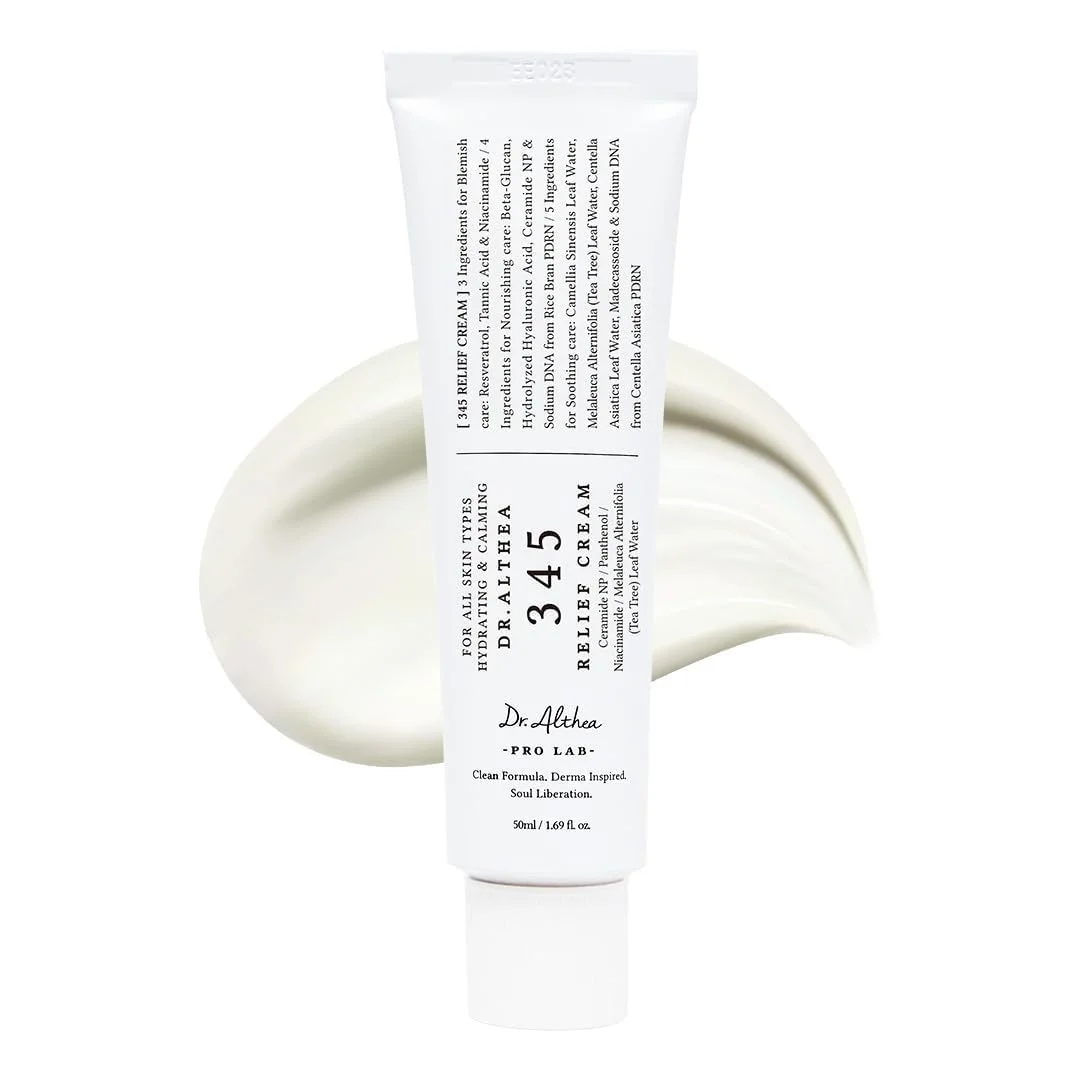
Table of Contents
- Quick Verdict
- My Skin Type + How Long I Used It
- What Does "345" Mean?
- What Is PDRN and Why Should You Care?
- Is Dr.Althea 345 Fungal Acne Safe?
- Comedogenic Rating: Will It Clog Your Pores?
- My First Night With Dr.Althea 345
- Before and After: My 4-Week Results
- Who Should (and Shouldn't) Use This
- Living With Seoul Skin
- Texture, Application, and How It Layers
- Results After Six Weeks
- Is Dr.Althea 345 the Same as Dr.G Red Blemish?
- How I Use It in My Routine
- The Things I Wish Were Different
- Top 3 Alternatives
- Final Thoughts
- FAQ
- Related Reads
Quick Verdict
Dr.Althea 345 Relief Cream - The Short Version
My rating: 4.3/5 for combination, acne-prone skin that needs a light barrier cream.
I would buy this again for spring, summer, and irritated breakout weeks. In deep winter, I sometimes need a richer cream on top of it at night. I also compare it against other options in my Best Korean Moisturizers 2026 guide if you are still deciding.
| What I liked | What I did not love |
|---|---|
| Light gel-cream texture that does not feel greasy on my T-zone | Not rich enough by itself for very dry winter nights |
| Layers cleanly under SPF and cushion foundation | Opaque tube makes it hard to know how much is left |
| Fragrance-free formula felt calm on my reactive cheeks | Post-acne mark fading was gradual, not instant |
| Good daily option when my skin is both oily and tight | The clinical white tube is not exciting, if that matters to you |
| Works well as a simple recovery step after actives | Most international buyers will be ordering online |
| Buy if | Skip if |
|---|---|
| Your skin is acne-prone but gets tight from harsh cleansers or actives | You want a thick, occlusive night cream |
| You need a moisturizer that behaves under sunscreen and makeup | You want one product that includes SPF |
| You like calming/barrier formulas but hate heavy creams | You prefer fragrance and a more sensorial texture |
| You are fading post-breakout redness slowly and consistently | Your main goal is stronger anti-aging treatment |
My Skin Type + How Long I Used It
My skin type: Combination-oily with acne-prone T-zone and occasional dry patches on cheeks (especially in winter). Sensitive to fragrance and heavy oils. Prone to post-inflammatory erythema (PIE) - those stubborn red marks that linger long after a breakout heals.
How long I tested: 6 weeks of twice-daily use (AM and PM), through late January to early March in Seoul - peak ondol season with temperatures ranging from -12C to 4C. I used it as my sole moisturizer to isolate results.
My Results at a Glance
- Week 1: Existing redness looked calmer, but I still had active breakouts.
- Week 2: A deep chin spot settled faster than usual for me, with less angry redness around it.
- Week 3: My skin felt smoother under sunscreen. Post-acne marks were still visible, just less loud.
- Week 4: I wore SPF and light concealer to brunch without feeling like my skin needed a full base.
- Week 6: Still using it. It layered under Beauty of Joseon Relief Sun without pilling.
- Makeup compatibility: Cushion foundation sat evenly as long as I gave the cream a minute to settle.
What Does "345" Mean?
This is the part that hooked me in Olive Young. The "345" name is a formula breakdown: three blemish-care ingredients, four hydrating ingredients, and five soothing ingredients. I do not think every ingredient needs to be treated like a headline, but the overall idea makes sense for the skin mood this cream targets: oily in some places, tight in others, and irritated enough that a plain gel moisturizer feels too small.
If you are comparing it with richer barrier creams, the important question is not whether the ingredient list looks longer. It is whether the finish is light enough for your daytime routine and still comforting enough when your skin feels tight.
The blemish-care side includes tea tree leaf water, niacinamide, and exfoliating-adjacent support. The barrier side leans on ceramide NP, hyaluronic acid, panthenol, and squalane. The calming side brings in madecassoside, allantoin, beta-glucan, bisabolol, and PDRN. That mix is why I see this less as a pure acne cream and more as a recovery moisturizer for skin that gets irritated around breakouts.
What Is PDRN and Why Should You Care?
If you are reading this from the US, UK, or Australia, PDRN may still feel like a niche K-beauty ingredient. In Korea, the ingredient is more familiar because PDRN is often discussed around clinic recovery treatments. In a moisturizer, though, I treat it much more modestly. This is a topical cream, not an in-office procedure.
The simple way I think about PDRN here: it is part of the calming and repair story, but it should not be the only reason you buy the cream. My skin responded well to the whole formula: the light texture, the lack of fragrance, the barrier ingredients, and the calming ingredients working together. If a brand makes PDRN sound like an instant scar eraser, I would be skeptical.
Think of it as a K-beauty barrier cream with a trendier recovery ingredient inside, not a clinic treatment in a tube.
Is Dr.Althea 345 Fungal Acne Safe?
This is the question I get in my DMs more than almost anything else, so let's go through it ingredient by ingredient. If you have dealt with fungal acne (malassezia folliculitis), you know the drill: you end up cross-checking the ingredient list before putting anything new on your face. It is exhausting. I have been there, standing in Olive Young with my phone out, squinting at CosDNA at 11pm.
Here's the breakdown for the key actives in Dr.Althea 345:
- Niacinamide: generally considered low-risk for malassezia-prone routines.
- Madecassoside: a centella-derived soothing ingredient, not a fatty ester.
- Ceramide NP: usually better tolerated than many rich, oily cream bases.
- Tea tree leaf water: a light watery base ingredient, not a heavy oil.
- Hyaluronic acid: a humectant, not the type of lipid people usually worry about.
- PDRN: not a fatty acid or ester.
- Squalane: often used in fungal-acne-conscious routines, but patch test if your skin reacts easily.
- Panthenol: a water-soluble barrier-support ingredient.
The thing to watch for with fungal-acne-prone routines is usually fatty acids, certain esters, and some polysorbates. I did not see the obvious trigger pattern I usually try to avoid in heavy creams. There is cetearyl alcohol, which some people personally avoid, so I would still patch test if your skin has a long history of reacting to moisturizers.
My take: this looks like a relatively fungal-acne-conscious option compared with many richer K-beauty creams. I would not promise that any moisturizer is universally safe, but this is one I would personally feel more comfortable testing if heavy creams usually make tiny bumps worse.
Comedogenic Rating: Will It Clog Your Pores?
If you are anything like me, you have been burned by a cream that called itself "lightweight" and then gave you three new closed comedones by Thursday. Comedogenic ratings are imperfect, because a full formula matters more than one ingredient, but they are still useful for spotting obvious problems.
- Niacinamide - 0. Completely non-comedogenic. It helps regulate sebum production.
- Hyaluronic Acid - 0. It's a humectant that draws water in. Zero pore-clogging potential.
- Ceramide NP - 0-1. Ceramides are skin-identical lipids, so your skin recognizes them and doesn't freak out.
- Squalane - 0-1. One of the lightest, least comedogenic oils out there.
- Panthenol - 0. Water-soluble vitamin, no pore risk.
- Madecassoside - 0. Not a lipid, not an issue.
- Tea Tree - 1. Mildly astringent, helps keep pores clear.
Dr.Althea markets this as non-comedogenic, and on my clog-prone T-zone it behaved better than many richer barrier creams. I did not get the forehead bumps I usually get from buttery moisturizers. That does not mean nobody will break out from it, but my skin did not read it as a heavy cream.
My risk read: low for my oily-combination, acne-prone skin. If you are terrified of new creams, this is still a patch-test product, but the texture and ingredient direction are friendlier than most rich barrier creams I have tried.
My First Night With Dr.Althea 345
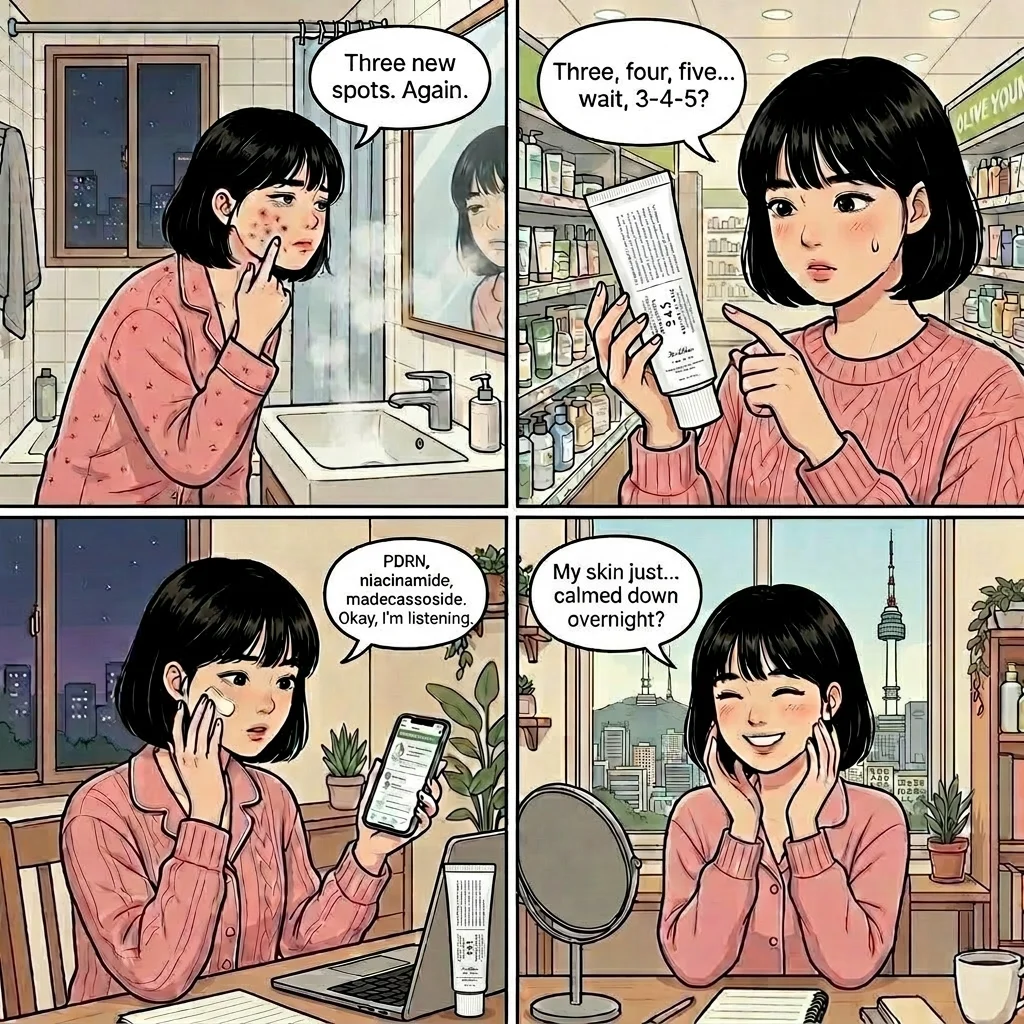
I remember the exact evening. It was a Thursday in late January, and I'd just gotten home from a long day near Gwanghwamun. Seoul was doing that thing where it's minus eight outside but every building cranks the ondol floor heating to tropical levels, so by the time I washed my face, my skin felt simultaneously parched and inflamed. I had three fresh blemishes on my left cheek - the stubborn, under-the-skin kind that throb when you accidentally brush your hair against them.
I squeezed a small amount of the 345 cream onto my fingers. The texture surprised me - it's a translucent gel-cream, not the thick white paste I'd expected from something called "Relief Cream." It spread easily without tugging, and within maybe thirty seconds, it absorbed completely. No sticky residue, no film. Just calm. My skin felt like it had taken a deep breath.
The next morning, I stood at my bathroom mirror near Mangwon-dong and the three blemishes had flattened noticeably. The redness around them had dialed down from angry crimson to a dull pink. One night. I said "huh" out loud to no one.
Before and After: My 4-Week Results
Alright, I kept actual notes on my phone for this because I knew I'd want to write about it. Here's my real, unfiltered week-by-week experience. No sugarcoating.
Week 1: Honestly? Still breaking out. I got two new spots on my chin the second day, which - okay, terrifying when you're testing a new product. But here's the thing: the redness around my existing breakouts was already calmer. Like, the angry inflamed halo around each spot had shrunk. My skin still looked messy, but it felt less... hostile? I kept going because nothing new was happening that wasn't already happening before I started. The morning after the ondol heating ran all night and my cheeks felt like paper, I slathered on a thicker layer and the tightness was gone within minutes. That sold me enough to keep trying.
Week 2: This is when I started believing in it. I had a spot on my chin - you know the kind, the deep painful one that normally hangs around for like ten days looking progressively worse? It was just... gone by day four. Like fully healed, just a faint pink mark left behind. Normally that would've been a full week of ugly scabbing. I also realized I hadn't gotten any new breakouts since the ones in week one. My friend Yuna and I got tteokbokki in Mangwon Market and she said my skin looked "less angry." Which is the most backhanded compliment but also accurate.
Week 3: This is the week I started paying closer attention. I went from my usual 2-3 new spots per week to maybe one tiny one near my hairline. The post-acne red marks from January were starting to fade, not dramatically, but enough that I could see a difference in bathroom lighting vs. harsh cafe lighting. I caught myself touching my cheek on the subway and being surprised at how smooth it felt. Less texture, less roughness.
Week 4: I woke up on a Sunday morning and my skin looked more even than it had in a while. Not perfect. I still had fading pink marks near my jawline. But the bumpy feeling on my forehead was calmer, and the blotchy redness across my cheeks was easier to cover. I went to brunch in Hannam-dong with sunscreen and a little concealer instead of doing my usual full cushion layer. That felt like the real result: not perfect skin, just skin I did not feel like fighting.
Who Should (and Shouldn't) Use This
I am not going to pretend one cream works for everyone. After testing this for over a month and comparing it with the questions I usually get from acne-prone readers, I have a clearer picture of who this is for and who should probably look elsewhere.
| Skin type / concern | My read | Why |
|---|---|---|
| Oily skin | Worth testing | The gel-cream texture absorbs fast and did not make my T-zone feel greasy. |
| Dry skin | Maybe, with layering | It has barrier ingredients, but very dry skin may still want a richer cream or sleeping pack at night. |
| Combination skin | Best fit | Light enough for oily zones, still comforting on cheek dryness. |
| Sensitive / reactive skin | Worth testing | Fragrance-free and calmer-feeling than the scented soothing creams I used before. |
| Acne-prone skin | Strong fit | The finish is light, and it did not trigger my usual tiny forehead bumps. |
| Normal skin, no concerns | Probably optional | You may not need a blemish-focused barrier cream. |
| Post-acne marks | Be patient | Niacinamide can help the look of uneven tone, but this is a weeks-long process. |
| Redness-prone skin | Worth patch testing | The calming ingredients make sense, but rosacea-level redness should be treated with a derm plan. |
| Damaged moisture barrier | Useful light layer | Panthenol, ceramide NP, and humectants make it a good daily recovery step. |
| Hormonal acne | Helps the aftermath | It will not stop hormonal breakouts at the source, but it can be a gentler moisturizer while you treat them. |
| Thick night cream lovers | Skip | This is lightweight by design. Try Dr.G R.E.D. Blemish or Aestura if you want more cushion. |
| Anti-aging as main goal | Skip | This is not a dedicated retinoid or peptide treatment. |
One more context note: after laser or peel appointments in Seoul, clinics often tell people to keep the routine gentle and barrier-focused for a few days. This is the kind of texture I would personally want in that window, but I would still follow whatever your own provider recommends after a procedure.
Living With Seoul Skin: Why This Cream Makes Sense Here
I always say that if your skincare can survive a Seoul winter, it can survive anything. Let me explain what "Seoul skin" deals with, because it's a unique cocktail of environmental stress that most Western beauty content never talks about.
Ondol heating dryness. Most Korean apartments use radiant floor heating called ondol. It is cozy until you wake up with tight cheeks and dry lips. A very watery gel disappears too quickly on me in that setting. The 345 cream felt more balanced: not heavy, but not gone in twenty minutes either.
Hwangsa yellow dust. On high-PM days, my skin tends to feel grimy and reactive after I get home, even when I cleanse properly. This is when I want a moisturizer that does not sting, does not add perfume, and does not feel like a waxy blanket. The 345 cream worked well for that post-commute reset.
Winter sunscreen still matters. If you are dealing with post-breakout marks, sunscreen is still the non-negotiable step. The niacinamide in this cream can support a more even-looking tone over time, but it is not going to outwork daily UV exposure. I use it under SPF every morning. Start with my guide to the best Korean sunscreens if you need options.
Texture, Application, and How It Layers
Let's talk about how this cream feels on your face, because texture can make or break a moisturizer for acne-prone skin.
I was sitting at a cafe in Seongsu one Saturday afternoon, doing my mid-day mirror check, and the dry patch near my nose was doing too much. I tapped a tiny amount of 345 cream over that area, then pressed cushion around it again. It did not look perfect, but it did not ball up or turn shiny, which is the kind of practical win I care about.
In my morning routine, I use it after my Anua Heartleaf 77 Toner and a serum, then I wait about a minute before sunscreen. That wait matters. If I rush, any cream can make sunscreen sit weird. At night, I use a little more after my Skin1004 Centella Ampoule.
One evening after hot yoga near Hapjeong, I came home flushed and tight, the kind of face that hates being touched. I applied the cream on slightly damp skin and left it alone. No extra serum, no mist, no panic layering. My skin felt calmer by the time I went to bed, which is why I now reach for this on irritated nights.
Results After Six Weeks
I've been using Dr.Althea 345 Relief Cream twice daily for about six weeks now, and here's what I've noticed:
Active breakouts looked less inflamed while healing. I cannot credit one moisturizer for the whole healing timeline, especially because I also use Rael pimple patches on surfaced spots. What I can say is that the skin around my breakouts looked less red and felt less tight.
Post-acne red marks are fading. The niacinamide is doing its job - slowly but surely. Two red marks I had near my jawline from December breakouts have lightened significantly. They're not gone, but the improvement is visible without makeup.
My moisture barrier feels stronger. I can tell because my skin no longer stings when I apply toner in the morning, which was a regular occurrence before when my barrier was compromised from the dry heating. The ceramide NP is pulling its weight here.
Overall redness is down. My baseline skin tone looks more even, less blotchy. A friend at brunch in Itaewon last weekend asked if I'd gotten a facial. I hadn't. It was just this cream, consistency, and SPF.
Is Dr.Althea 345 the Same as Dr.G Red Blemish?
I get this question a lot, and I understand why. Both are Korean moisturizers marketed for blemish-prone, sensitive skin. Both come in clinical-looking tubes. Both are popular at Olive Young. But they're quite different products with different approaches.
Dr.G R.E.D. Blemish Clear Soothing Cream focuses primarily on centella-based soothing with a richer, more emollient texture. It's a solid cream - I've used it before and liked it. But it doesn't have PDRN, its niacinamide concentration is lower, and the formula feels heavier on oily-acne skin types. If you have dry-sensitive skin without much acne, Dr.G might suit you better. But for oily-combination skin with active breakouts and post-acne marks? Dr.Althea 345 wins for me.
Then there's the COSRX Full Fit Propolis Light Cream (or its ampoule version), which I also see compared to the 345 a lot. COSRX Propolis is a great product - I'm a fan of propolis for its antibacterial and healing properties. But it's primarily a hydrating, glow-giving product rather than a targeted blemish treatment. It doesn't have madecassoside, PDRN, or ceramides. It's more "healthy skin glow" and less "put out the fire on my chin." Different jobs.
Comparison Table
| Feature | Dr.Althea 345 Relief Cream | Dr.G R.E.D. Blemish Cream | COSRX Propolis Ampoule |
|---|---|---|---|
| Key Actives | PDRN, Niacinamide, Madecassoside, Ceramide NP, Tea Tree | Centella Asiatica, Madecassoside, Ceramide 3 | Propolis Extract (83.25%), Honey Extract |
| Texture | Lightweight gel-cream | Medium-weight cream | Lightweight serum-ampoule |
| Best For | Acne-prone skin with redness + post-blemish marks | Dry-sensitive skin with general redness | Dull skin needing hydration + glow |
| PDRN | Yes | No | No |
| Fragrance-Free | Yes | Yes | Yes |
| Vegan | Yes | No | No (propolis/honey) |
| Amazon Rating | 4.6★ (13,492) | 4.5★ | 4.6★ |
Bottom line: these three products serve overlapping but distinct purposes. Dr.Althea 345 is the most comprehensive for acne-prone skin that needs both calming and barrier repair simultaneously.
How I Use It in My Routine
Morning: Gentle cleanser > Anua Heartleaf 77 Toner > Vitamin C serum > Dr.Althea 345 Relief Cream > Sunscreen
Night: Double cleanse > Toner > Skin1004 Centella Ampoule > Dr.Althea 345 Relief Cream (slightly thicker layer) > Rael pimple patch on any active spots
On especially dry nights - like last week when the temperature dropped to minus twelve and my ondol was working overtime - I press a thin layer of sleeping pack over the cream. But most nights, the 345 alone provides enough moisture to wake up without tightness.
The Things I Wish Were Different
No product is perfect, and I want to be honest here. The tube packaging, while hygienic, is completely opaque - I have no idea how much product is left until one day it just stops coming out. A squeeze tube with a window or a jar format would help, though I understand jars are less sanitary for acne-prone skin.
I also wish the tone-evening effect kicked in faster. It took a solid two to three weeks before I noticed any change in my post-acne marks. That is normal for niacinamide, but if you are expecting fast dark-spot erasure, recalibrate your expectations.
And the packaging design itself is... clinical. There's nothing wrong with that functionally, but in the era of aesthetic shelfies, the plain white tube isn't winning any beauty points. This is a substance-over-style product, which I personally respect, but it's worth noting if aesthetics matter to you.
Top 3 Alternatives to Dr.Althea 345 Relief Cream
I like the 345 cream a lot, but not every product is for every face. These are the alternatives I would consider if your skin needs a different texture or your routine already covers the blemish-care step.
1. Dr.G R.E.D. Blemish Clear Soothing Cream
If you have dry-sensitive skin and the lightweight gel-cream texture of Dr.Althea 345 is not enough moisture for you, Dr.G is where I would point you. It is centella-based with a richer, more emollient feel. I used this through a Seoul winter before switching to the 345, and it was better for flaky patches. Best for dry-sensitive skin that needs more weight than the 345 provides.
If your skin leans dry or compromised, compare it with the richer options in my damaged barrier skincare guide before choosing Dr.Althea purely because it is trending.
2. COSRX Full Fit Propolis Light Ampoule
This one is for dull, tired-looking skin with occasional blemishes rather than full-on acne treatment. I layer propolis under the 345 cream sometimes when my skin looks flat, but it is not a moisturizer replacement. It is a serum step, and it adds a glow lane the 345 cream does not cover on its own. Not vegan, because propolis is a bee product, which matters to some of you.
If you are deciding between moisturizer and serum, start with moisturizer first. Add propolis only if your barrier step is already working and you want more glow.
3. IUNIK Propolis Vitamin Synergy Serum
If you want propolis benefits but also need a brighter look, IUNIK is the more serum-focused route. I tested this during 황사 season last spring, and I liked it more as a morning serum than as a replacement for a barrier cream. The texture is slightly thicker than the COSRX ampoule but still layers well. I would choose it only if you already have a basic moisturizer you like.
For acne-prone skin, keep the routine order simple: treatment serum if needed, then a moisturizer like Dr.Althea, then sunscreen in the morning.
Final Thoughts: Does Dr.Althea 345 Really Work for Acne-Prone Skin?
Here is where I land after six weeks of daily use through Seoul winter: this is a strong light barrier cream for acne-prone combination skin. It is not the richest cream I own, and it is not an acne treatment by itself. But for daily calming, sunscreen layering, and keeping my routine simple when my skin is irritated, it makes sense.
The "345" formula concept is useful because it keeps the product focused: blemish care, hydration, and soothing in one lightweight cream. My skin looked calmer after consistent use, but the bigger win was that I stopped switching moisturizers every few days and irritating my barrier all over again.
If your skin is stuck in that frustrating cycle of breaking out, healing slowly, and then getting irritated from every "treatment" you add, this is a sensible moisturizer to test. Patch test it, keep your actives simple, and do not skip sunscreen.
Where to Buy Dr.Althea 345 Relief Cream
Dr.Althea 345 is available on a few platforms. Here is where I would buy it and why.
| Platform | - | Shipping | Best For |
|---|---|---|---|
| Amazon US | - | Prime eligible, fast | Fastest delivery, easy returns |
| YesStyle | - | International shipping | Slightly cheaper, bundles well |
My pick: Amazon for the return policy alone. If your skin reacts to something, you want that one-click return option. If you're already ordering a bunch of K-beauty and want to save on shipping, YesStyle is solid.
Check Price on Amazon See on YesStyle
Frequently Asked Questions
Is Dr.Althea 345 Relief Cream good for sensitive skin?
It is worth patch testing if you prefer fragrance-free, lightweight barrier creams. My sensitive, acne-prone skin tolerated it well over six weeks, but reactive skin is personal, so introduce it slowly.
Can I use Dr.Althea 345 with retinol?
Yes, if your skin already tolerates retinol. I would apply retinol first, wait a few minutes, then layer the 345 cream on top. On sensitive nights, use the moisturizer sandwich method or skip retinol and keep the routine plain.
How long does it take to see results with Dr.Althea 345?
I noticed less angry-looking redness within the first week. Texture and barrier comfort were easier to judge around weeks three to four. Post-acne marks need more patience, especially if you are not consistent with sunscreen.
Is Dr.Althea 345 fungal acne (malassezia) safe?
It looks relatively friendly for fungal-acne-conscious routines compared with many rich creams, but I would not call any moisturizer universally safe. Check the current ingredient list before buying and patch test if malassezia bumps are a recurring issue for you.
Does Dr.Althea 345 have SPF?
No, it does not contain SPF. Use a separate sunscreen during the day, especially if post-acne marks are one of your concerns. I use it under sunscreen every morning and give it about a minute to settle first.
What's the difference between Dr.Althea 345 and Dr.G R.E.D. Blemish Cream?
Both target blemish-prone sensitive skin, but the textures are different. Dr.Althea 345 is a lighter gel-cream that suits oily-combination skin better for me. Dr.G R.E.D. Blemish feels richer and may be better if your skin is dry-sensitive with general redness.