
Short verdict: yes, some people use aloe vera gel with NuFACE, but I would not make it the first choice if you are new. Start with NuFACE Aqua Gel so you know what proper slip feels like. If you use your device often, the Aqua Gel 10 oz is the cleaner refill strategy. If your skin is dry, compare NuFACE Silk Creme before trying random substitutes.
My friend answer: I get why you are asking. Activator refills are not cute. You buy a microcurrent device, feel proud for five minutes, then realize the gel is a recurring cost. Very rude. But cheaper gel is not automatically cheaper if it makes the device drag, irritates your skin, or turns the whole routine into a bathroom experiment.
I checked the current NuFACE Aqua Gel, Silk Creme, and Amazon pages on July 7, 2026. NuFACE positions Aqua Gel as a microcurrent activator designed to help conduct microcurrent, with 1.69 oz, 3.3 oz, and 10 oz size options. This article is a practical buying guide, not medical advice. Do not use a current-based device on broken, irritated, sunburned, freshly treated, or reactive skin.
Actual Products Mentioned
Use these product photos to match the packaging before you click through or compare listings.
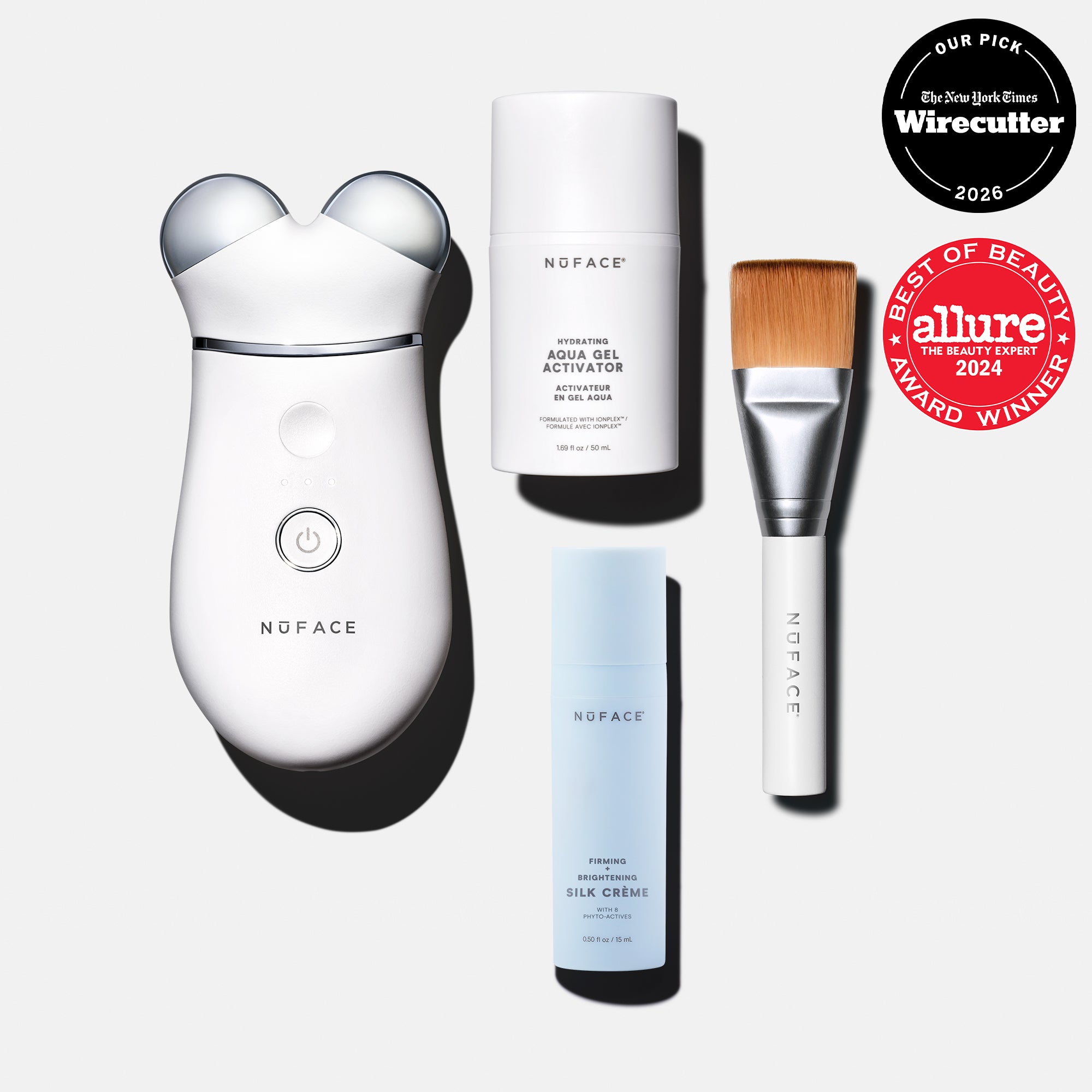
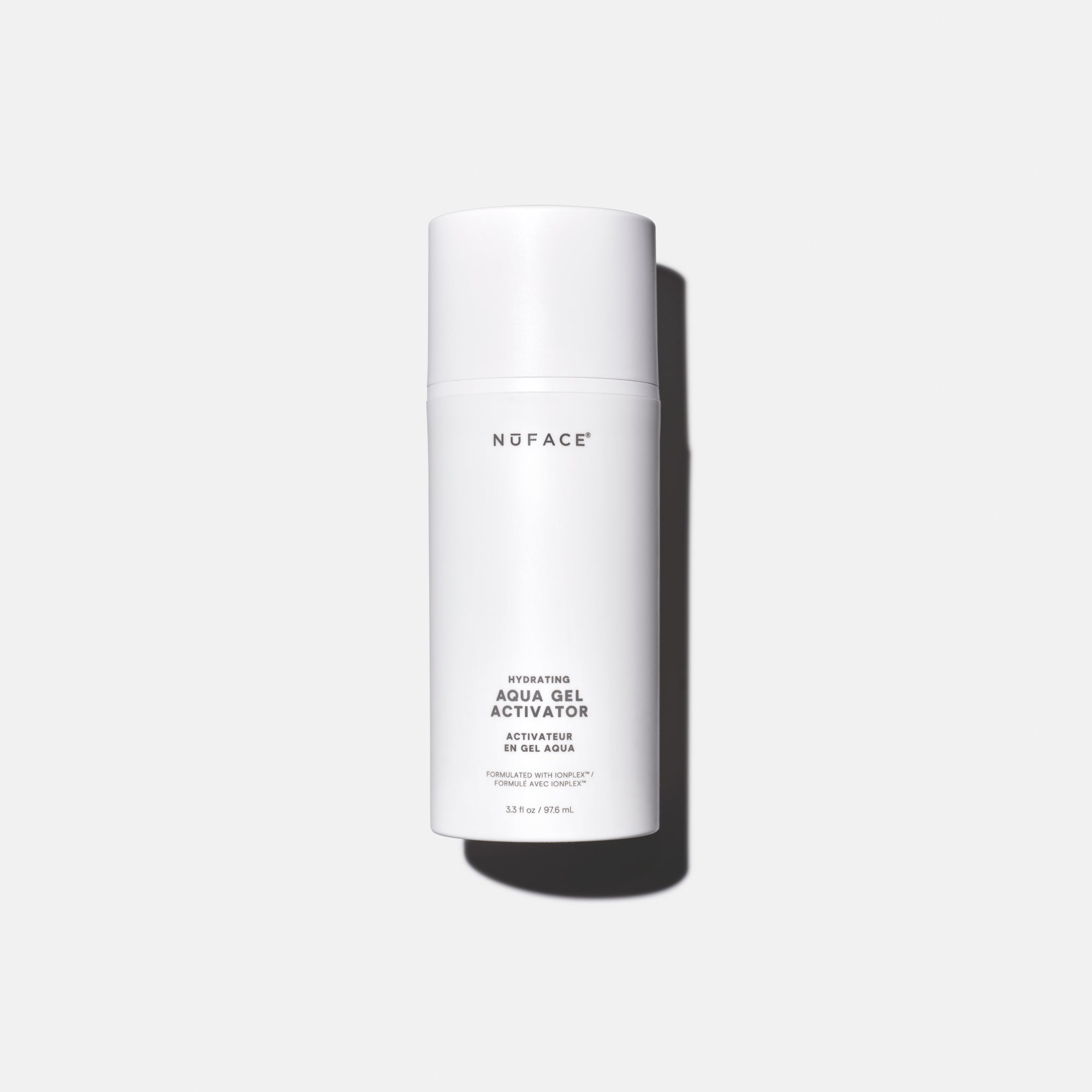
If your real question is which official activator to buy, read my NuFACE Aqua Gel vs Silk Creme comparison. If you want the dupe buying map, read NuFACE Aqua Gel dupe. If you want the full shelf breakdown, read my best conductive gel for NuFACE guide. If you are new to the device, start with my NuFACE routine for beginners.
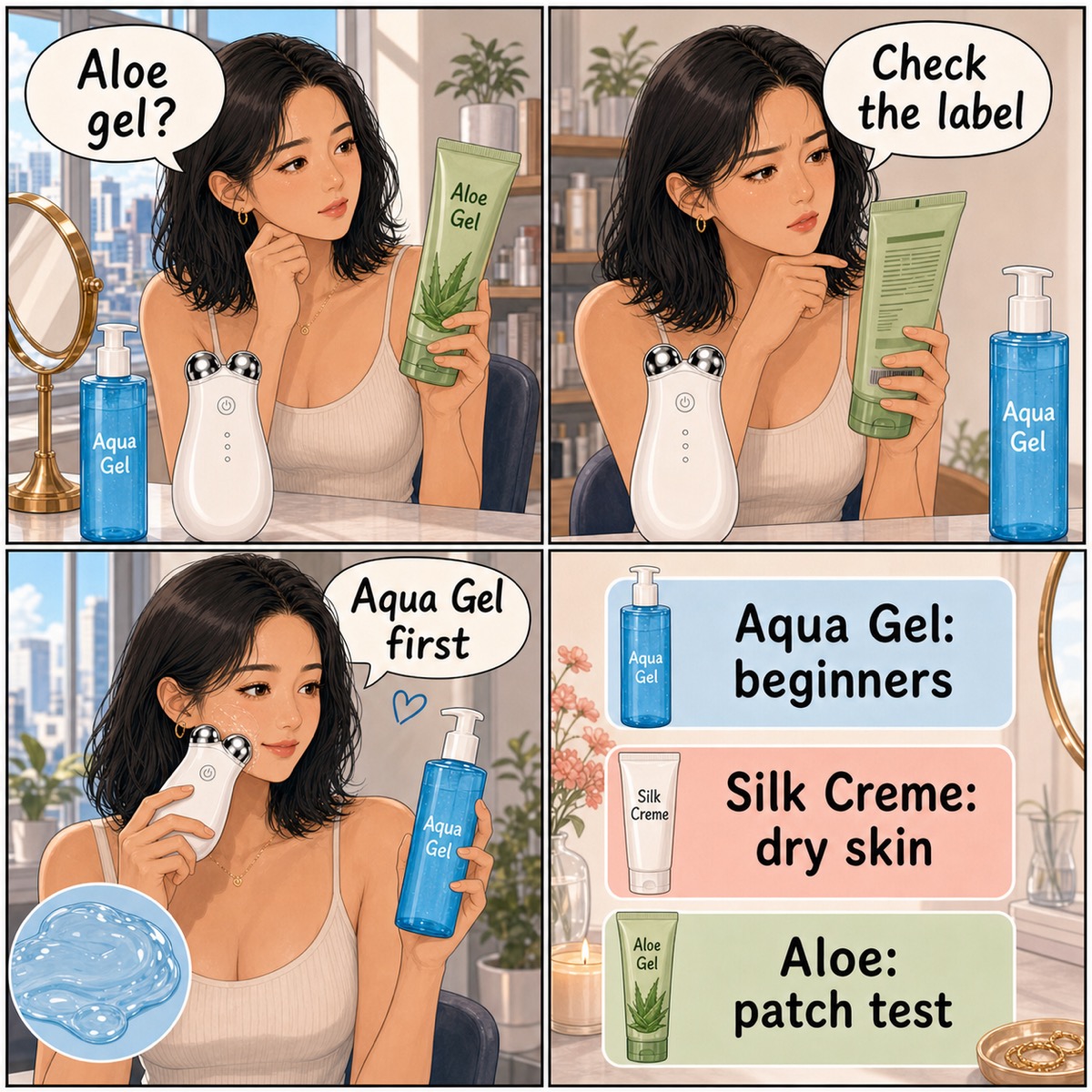
Quick Answer: Aloe Vera Gel With NuFACE
| Best beginner answer | Use NuFACE Aqua Gel first |
| Best refill strategy | Aqua Gel 10 oz |
| Best dry skin route | Silk Creme |
| Aloe gel answer | Patch test and check the ingredient list first |
| Avoid | Oils, fragrance-heavy gels, exfoliating acids, retinoids, and drying alcohol |
Can You Use Aloe Vera Gel With NuFACE?
You can find people online who use aloe vera gel with NuFACE or other microcurrent devices. I am not going to pretend that nobody does it. The more useful answer is whether it should be your first plan.
For most beginners, no. I would start with NuFACE Aqua Gel first because it gives you a clean baseline. You learn how much slip you need, how the device should glide, how fast the product dries, and how your skin feels after the routine. Once you know the baseline, you can make a more informed decision about substitutes.
Jumping straight into aloe gel can make troubleshooting messy. If your device drags, is it the gel texture? Did you use too little? Did it dry down too fast? Is there fragrance? Is your skin irritated from something else? Now your first week has too many variables, and that is how a simple device routine becomes annoying.
My conservative take: aloe gel is a possible substitute category, not my first recommendation. Aqua Gel first. Silk Creme if dry skin needs more cushion. Aloe only if you are careful with ingredients and patch testing.
Why NuFACE Needs Gel at All
NuFACE devices use microcurrent. A microcurrent routine needs a conductive layer on the skin so the device can glide and maintain contact. That layer is not a decorative spa detail. It is part of the device routine.
If you use too little product, the device can tug. If the product dries down before you finish, the glide can get worse. If the product has ingredients your skin dislikes, your face may blame the device even though the real problem was the layer underneath.
This is why I keep saying gel is part of the device budget. Buying NuFACE MINI+ or NuFACE Trinity+ without accepting the gel habit is like buying running shoes and refusing socks because socks were not the exciting part.
Living in Seoul, I see the same pattern with beauty devices and toner pads: people buy the main product with main-character confidence, then get cheap with the boring refill. The boring refill is often what decides whether the routine survives.
Why Aloe Gel Is Tempting
Aloe gel is tempting because it sounds simple. It is usually clear, slippery, easy to find, and cheaper than many official activators. It also has a calming skincare reputation, so it feels like a safe swap at first glance.
The problem is that aloe gel is not one product. One aloe gel can be plain and watery. Another can be sticky, perfumed, alcohol-heavy, dyed green, full of botanical extracts, or designed more for body use after sun exposure than for a facial device routine.
That is why the phrase aloe vera gel is too broad. The ingredient list matters. Texture matters. How fast it dries matters. Your skin matters. If you are using a current-based device, I want fewer surprises, not more.
If the goal is saving money, the better first move may be the Aqua Gel 10 oz. It keeps you in the NuFACE activator lane while making it less painful to use enough product.
Ingredient Checklist Before Using Aloe Gel
If you still want to try aloe gel, read the ingredient list first. Not the front label. The real ingredient list.
- Fragrance: I would avoid it for this use, especially if your skin is reactive.
- Essential oils: not the move for a device layer.
- Exfoliating acids: avoid AHA, BHA, PHA, and peel-style formulas.
- Retinoids: do not turn device night into retinoid night by accident.
- Drying alcohol: can make the product dry down faster and feel less comfortable.
- Oils: not ideal for conductivity and not what I would use under a microcurrent device.
- Sticky film: if it gums up or pills, skip it.
Also patch test. I know that sounds boring. Boring is the point. Try the product on a small area before putting it all over your face with a device. If your skin stings, flushes, itches, or feels weird, do not keep going just because the bottle was cheaper.
How I Would Test a Substitute Gel
If you are determined to test aloe gel or ultrasound gel, do not make the first test a full face and neck routine. That is too much surface area for a product you do not know yet.
I would test it like this:
- Patch test first. Try a small area without the device and wait to see how your skin feels.
- Use one small section. Test one cheek area, not your entire face.
- Use low pressure. Do not press harder because the glide feels worse.
- Watch dry-down speed. If it dries quickly, it is not saving you effort.
- Stop if it stings. Do not negotiate with irritated skin.
- Keep the rest of skincare plain. No exfoliating toner, retinoid, or new active that night.
The goal is not to prove the substitute can work at any cost. The goal is to see whether it makes your routine easier without creating a new skin problem. If the answer is no, go back to Aqua Gel and move on with your life.
The Cost Math People Miss
Cheaper gel only saves money if it lets you use the device correctly and consistently.
If a substitute costs less but dries faster, you may use more product. If it pills, you may waste time cleaning it up. If it irritates your skin, you may stop using the device for a week. If it makes the routine feel annoying, you may quit the routine entirely. That is not a bargain. That is a detour.
This is why the Aqua Gel 10 oz matters in this conversation. It is not the sexiest recommendation, but it solves the most common refill behavior: using too little gel because you are afraid of running out.
If you already like Aqua Gel, the bigger size can make the whole routine feel less precious. You can apply enough, reapply in sections, and stop treating every pump like it needs a financial review meeting.
I broke down the refill math and who should skip the big size here: NuFACE Aqua Gel 10 oz worth it?
Aloe Gel vs Aqua Gel
NuFACE Aqua Gel wins for beginners because it is the cleanest baseline. It is made for the NuFACE routine, and the current official page positions it as a microcurrent activator designed to help conduct microcurrent.
Aloe gel wins only if you already know your skin likes the exact formula, the texture stays slippery enough, and the ingredient list is calm. That is a lot of conditions for a beginner.
Here is the practical comparison:
| Question | Aqua Gel | Aloe Gel |
|---|---|---|
| Best for beginners | Yes | Not my first pick |
| Main benefit | Known NuFACE activator role | Potentially cheaper |
| Main risk | Recurring cost | Ingredient and texture uncertainty |
| Best buying move | Start here, then consider 10 oz | Patch test only after you know the baseline |
My answer is not exciting, but it is useful: start with Aqua Gel, then decide whether you even need a substitute.
What About Ultrasound Gel?
Ultrasound gel is another common substitute people ask about because it is made to be slippery and conductive for professional contexts. It can sound more logical than aloe gel.
I still would not make it my first beginner recommendation. The reason is the same: you need to check ingredients, texture, skin tolerance, and whether it plays well with your face. Some formulas are made for clinical use, not a cozy skincare routine before bed.
If you try ultrasound gel, be extra boring. Patch test. Avoid fragrance. Avoid weird actives. Do not use it if it stings or dries down badly. Do not use it over broken or irritated skin. And do not assume cheaper bulk gel is automatically better for your face.
If ultrasound gel is the exact swap you are considering, read my dedicated guide: Can you use ultrasound gel with NuFACE?
If you are trying ultrasound gel only because Aqua Gel refills feel expensive, pause and compare the 10 oz Aqua Gel first. The refill anxiety may be solved by buying the size that lets you use enough product.
What About Regular Skincare Serums?
I would not use random skincare serums as the main conductive layer.
A watery serum may feel slippery for thirty seconds, but that does not make it the right device layer. Many serums contain actives, acids, vitamin C, retinoids, fragrance, or ingredients that may not be what you want under a current-based device. Also, serums can dry down fast and leave the device dragging.
Save your K-beauty serums for after the device routine unless your device instructions say otherwise. For NuFACE, keep the device step focused: clean dry skin, activator, device, then skincare after.
If your routine is already complicated, simplify it before blaming the gel. Cleanser, activator, device, cleanup as directed, moisturizer, SPF in the morning. That is enough. Your bathroom does not need a plot twist every night.
When Aloe Gel Might Be Okay
Aloe gel might be okay if all of these are true:
- You already know what NuFACE with Aqua Gel feels like.
- The aloe gel has a simple ingredient list.
- It does not contain fragrance, oils, strong actives, or drying alcohol.
- It stays slippery enough for the whole section.
- You patch tested it first.
- Your skin is calm and not reactive that week.
- You are willing to stop if it feels wrong.
That is a lot of ifs. This is why I do not push aloe gel as the default. It can be a cautious experiment for someone who already understands the routine. It should not be the first thing a beginner uses while still learning pressure, glide, and gel amount.
Who Should Not Use Aloe Gel With NuFACE
Skip aloe gel if your skin is sensitive, reactive, peeling, recently exfoliated, freshly treated, sunburned, or already irritated. Also skip it if the product smells strong, feels sticky, contains essential oils, or dries down fast.
Skip it if you are the kind of person who will keep using a product even when your skin is clearly annoyed because you already bought it. No judgment. I know that personality. She lives in many of us. But this is not the routine for stubbornness.
Also skip substitutes if you just bought NuFACE and are still learning. Give yourself a clean first week. You can get creative later if you want. First week is for learning the boring basics.
Best Buying Path
If I were setting up the cart for a friend, I would do this:
- First NuFACE routine: buy NuFACE Aqua Gel.
- Frequent user: buy Aqua Gel 10 oz.
- Dry skin: consider Silk Creme.
- Still curious about aloe: patch test only after you know what normal glide feels like.
That path gives you a baseline first. It also stops you from blaming NuFACE for a bad substitute. If Aqua Gel works and you use the device consistently, great. If Aqua Gel dries too fast, compare Silk Creme. If refill cost is the problem, look at 10 oz. Aloe comes after those decisions, not before.
Buy Aqua Gel Check 10 oz Aqua Gel Check Silk Creme
FAQ: Aloe Vera Gel With NuFACE
Can you use aloe vera gel with NuFACE?
Some people use aloe vera gel with NuFACE, but I would not make it the first choice for beginners. Start with NuFACE Aqua Gel so you know how proper slip should feel, then consider substitutes only with careful ingredient checks and patch testing.
What should I avoid in aloe gel for NuFACE?
Avoid fragrance, essential oils, exfoliating acids, retinoids, drying alcohol, oils, and anything that stings or dries down too fast. The product should stay slippery enough for the device to glide comfortably.
Is ultrasound gel better than aloe gel for NuFACE?
Ultrasound gel can sound logical because it is slippery and conductive, but I still would not make it the first beginner choice. Check ingredients, patch test, and stop if your skin feels irritated.
What is the safest gel to start with for NuFACE?
For most beginners, the safest practical starting point is NuFACE Aqua Gel because it is made for the NuFACE microcurrent routine and gives you a clean baseline for texture and glide.
Why does my NuFACE drag with aloe gel?
Your aloe gel may be drying down too fast, you may be using too little, or the texture may not provide enough slip. Reapply in sections or switch back to NuFACE activator if the device does not glide comfortably.
Is Aqua Gel 10 oz worth it?
Aqua Gel 10 oz can be worth it if you already know you like Aqua Gel, use NuFACE often, treat face and neck, or keep under-applying because you are afraid of running out.
Heads up: this post has Amazon affiliate links (tag: minjiinseoul-20). If you click through and buy, I get a small commission at no extra cost to you. I never recommend something based on commission size; some of my favorites pay less than products I do not recommend. See the full Affiliate Disclosure.