The best Korean setting powders on Amazon for oily skin are the ones that control shine without making your cushion foundation look dry, gray, or weirdly dusty. My short answer: buy Innisfree No Sebum Matte Mineral Powder if you want the classic oil-control pick, Etude Zero Sebum if you want a tiny loose powder for very shiny days, Skinfood Peach Cotton if you want a softer scented powder, and an Etude pact if you need something less messy for your bag.
If powder helps but your base still breaks down, compare my best Korean primers on Amazon guide.
If BB cream gets shiny by lunch, pair this with my best Korean BB creams on Amazon guide.
If you are setting concealer under the eyes or around the nose, pair this with my best Korean concealers on Amazon guide.
If your lids get oily after base makeup, my best Korean eyeshadow palettes on Amazon guide explains which soft mattes and shimmer styles make sense.
If oily lids make eye makeup move, I also made a best Korean eyeliners on Amazon for oily lids guide.
If powder keeps your base soft-matte, pair it with my best Korean blushes on Amazon guide for powder, liquid, and jelly cheek picks.
If powder fixed your base and you want the rest of the makeup to look clean too, compare my best Korean brow products on Amazon picks.
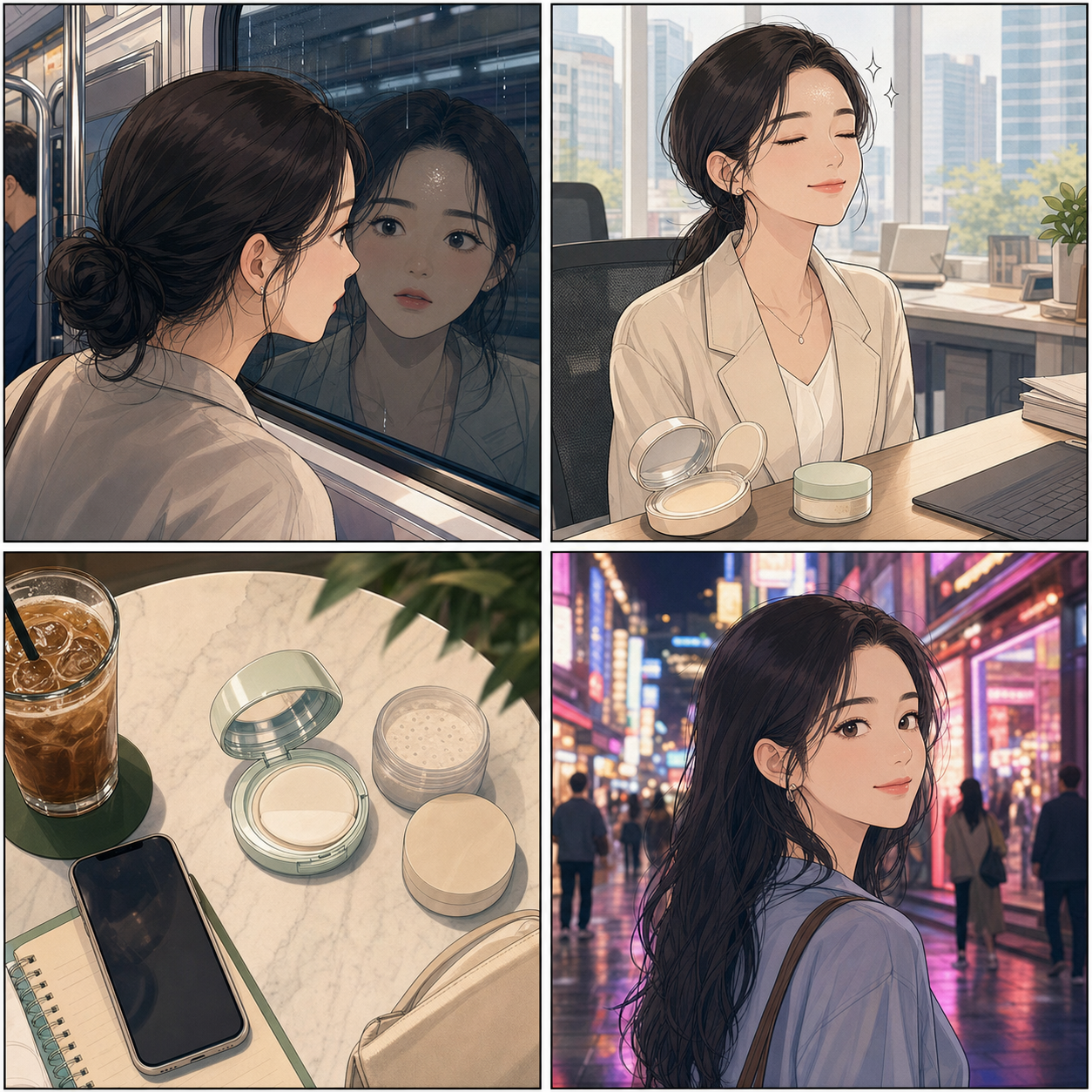
If your makeup looks cute at 9 a.m. and then turns glossy by lunch, you do not need to panic-buy a whole new cushion. Sometimes the missing step is a small setting powder used in the right places. Not everywhere. Not baked under the eyes like it is 2016. Just where Seoul humidity, sunscreen, and oily skin keep teaming up against you.
I care about powder because Korean base makeup is usually dewy by default. That is pretty until monsoon season hits, your sunscreen is shiny, your cushion is glowing, and your forehead is reflecting the subway lights like a warning sign. A good Korean powder should calm that down without deleting the skin-like finish.
Buying shortcut
My oil-control powder cart
Start with Innisfree No Sebum Matte Mineral Powder for classic shine control, Etude Zero Sebum for stronger loose-powder oil control, Skinfood Peach Cotton for a softer finish, and a pressed pact if you need touch-ups outside.
I would compare the formula type first: loose powder for morning setting, pressed powder for outside touch-ups, and scented powder only if fragrance does not bother you.
Best Korean Setting Powders on Amazon: Quick Picks
| Product | Best for | Finish | My note |
|---|---|---|---|
| Innisfree No Sebum Matte Mineral Powder | Classic oil control and pore-blurring matte finish | Soft matte, translucent | Safest first pick |
| Etude Zero Sebum Loose Powder | Very oily skin and tiny-bag powder | Matte, lightweight | Good for shiny T-zones |
| Skinfood Peach Cotton Multi Finish Powder | Soft blur and peach-scented finish | Velvety soft matte | Skip if fragrance bothers you |
| Etude Sebum Soak Pact | Pressed powder touch-ups | Soft matte, less messy | Better for bags and bathrooms |
| Innisfree No Sebum Pressed Powder | On-the-go oil control | Matte compact | Pressed version of the classic idea |
| Black Rouge Egg Blur Powder | Pore-blur shoppers who want a newer option | Airy matte blur | Comparison pick, not my first buy |
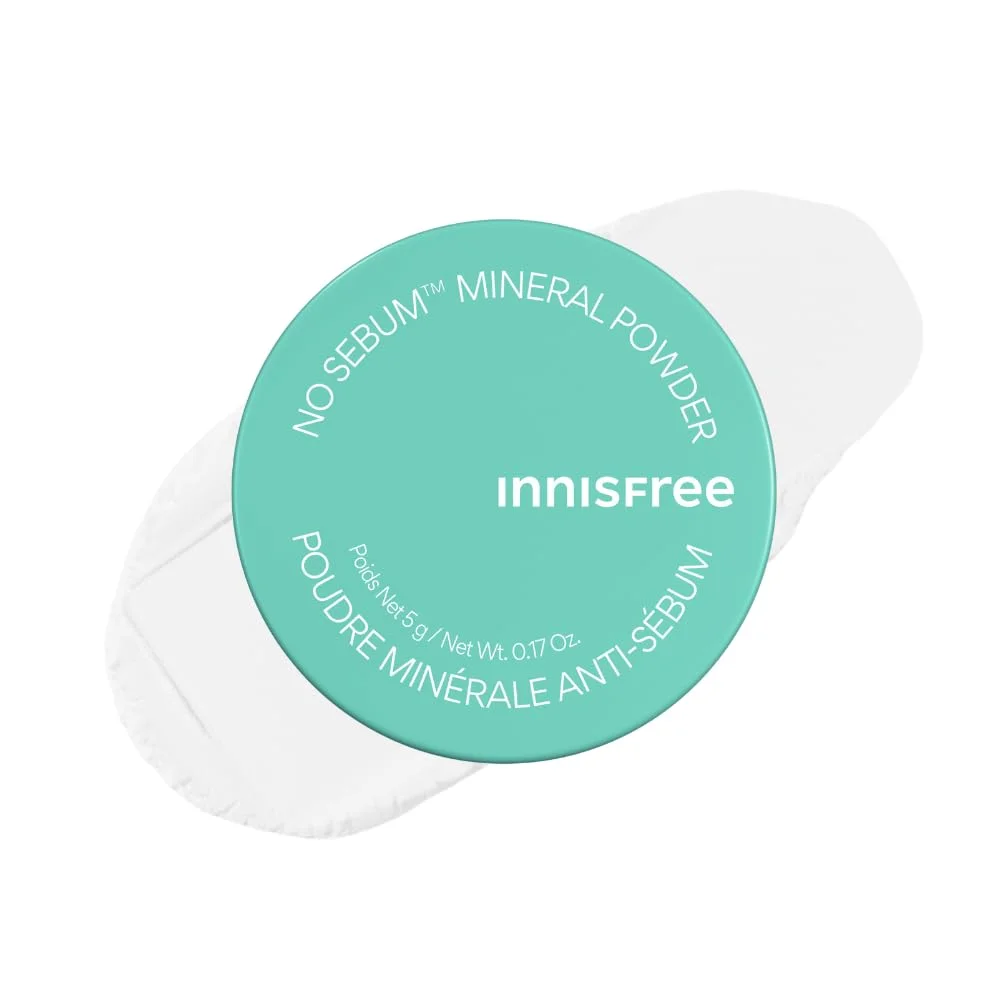
Actual Product Image
Why I Picked These Powders
I ranked these by oil control first, then texture, then whether they make sense with Korean cushion foundation. The best powder for oily skin is not automatically the driest powder. If it makes your base crack around the nose and mouth, it solved one problem by creating another one.
For K-beauty makeup, I want powder that can set sunscreen, calm the T-zone, and blur pores without killing the whole skin finish. That is why I like small loose powders and pressed pacts more than heavy full-face powder routines. The Korean approach is usually more targeted: forehead, nose, smile lines, maybe the chin. The cheeks can still look like skin.
I also considered Amazon practicality. Innisfree, Etude, and Skinfood are brands U.S. shoppers can usually search without needing a forwarding service. That matters because a shopping guide is only useful if readers can find the product after reading.
1. Innisfree No Sebum Matte Mineral Powder
Best for: classic Korean oil control, pore blur, and soft matte touch-ups.
Innisfree No Sebum Matte Mineral Powder is the classic for a reason. It is the product I would give someone who says, "My cushion looks good, but my T-zone gets shiny too fast." It is small, simple, and very clearly built around oil control.
The Amazon listing describes it as a translucent Korean loose powder that absorbs oil, blurs pores, and leaves a smooth matte finish. That is exactly the lane where this product makes sense. It is not meant to give coverage. It is not a foundation powder. It is a shine-control tool.
I like it most on the forehead, around the nose, and anywhere sunscreen stays too glossy. Use a tiny amount. If you over-apply, especially on dry patches, it can look powdery. That is not Innisfree being rude. That is you using oil-control powder where your skin did not have much oil.
Who should skip it: very dry skin, flaky texture, or anyone who wants coverage from powder. This is for setting and mattifying, not hiding acne marks.
Check Innisfree No Sebum Matte Mineral Powder on Amazon
2. Etude Zero Sebum Loose Powder
Best for: oily skin that needs a stronger tiny powder.
Etude Zero Sebum Loose Powder is the one I would compare if Innisfree sounds too familiar and you want another Korean oil-control classic. The Amazon listing positions it for oily skin and extra sebum control, with a lightweight mineral-powder direction.
This is the powder I would use more carefully than a soft finishing powder. It is best in small zones: nose, forehead, and the center of the face. If your cheeks are normal or dry, leave them alone. You do not get extra points for making your entire face matte.
I also like the tiny size idea for travel or a small bag. It is not glamorous, but it is practical. In Seoul summer, practical wins. A tiny powder that keeps your sunscreen from looking greasy at 3 p.m. is more useful than a beautiful compact you never carry.
Who should skip it: dry skin, mature skin that dislikes matte powder, or anyone who wants a luminous finish.
Check Etude Zero Sebum Loose Powder on Amazon
3. Skinfood Peach Cotton Multi Finish Powder
Best for: soft blur, light oil control, and people who like a peach-scented powder.
Skinfood Peach Cotton Multi Finish Powder is the prettier, softer-feeling option in this list. The Amazon product page describes it as a translucent powder for reducing oily skin and helping makeup settle, with a soft air-spun texture direction.
I would choose Skinfood if you want your powder step to feel less clinical. It is still an oil-control product, but the vibe is softer than "I am attacking my forehead shine." If Innisfree is the practical subway-bag powder, Skinfood is the cute cafe touch-up powder.
The caution is scent. If you are fragrance-sensitive or hate peachy beauty products, skip this. Also, scented powder near the nose can feel annoying if you are sensitive that day. Cute is not worth a headache.
Who should skip it: fragrance-sensitive skin, people who want a totally plain powder, or anyone who needs the strongest oil control.
Check Skinfood Peach Cotton Powder on Amazon
4. Etude Sebum Soak Pact
Best for: pressed-powder touch-ups without loose powder mess.
A pressed pact makes more sense if loose powder always ends up in your bag. Etude Sebum Soak Pact is the one I would compare if your main problem is midday shine outside the house. The Amazon listing describes a translucent, non-drying micro powder direction for shine control.
Pressed powder is less airy than loose powder, but it is easier to control in public. You can tap the puff, press the T-zone, and move on. No tiny cloud of powder. No bathroom counter situation. Very important if you are touching up at work or in a cafe bathroom with terrible lighting.
I would not use this as a heavy full-face powder. Keep it strategic. Press, do not drag. Dragging powder over cushion can move the base underneath and make everything look patchy.
Who should skip it: people who prefer loose powder texture, or anyone who already owns a compact powder that works.
Check Etude Sebum Soak Pact on Amazon
5. Innisfree No Sebum Pressed Powder
Best for: people who like Innisfree but hate loose powder.
If you already know you like the Innisfree No Sebum finish but loose powder annoys you, compare the pressed version. This is a practical choice, not a dramatic one. The point is convenience.
I would choose the loose version for the lightest application at home and the pressed version for touch-ups outside. If you are only buying one and you commute often, pressed may be easier. If you mostly set makeup at your desk or vanity, loose powder is usually softer.
Who should skip it: people who want the most airy texture or who already carry blotting papers and do not need compact powder.
Check Innisfree No Sebum Pressed Powder on Amazon
6. Black Rouge Egg Blur Powder
Best for: pore-blur shoppers who want a newer Korean makeup option.
Black Rouge Egg Blur Powder is the newer-style option I would compare if you are bored of the same two oil-control powders. Amazon search results currently surface Egg Blur Powder with lightweight loose setting powder and oil-control messaging, which fits this category.
I would treat it as a comparison pick, not the first safest buy. If you are new, start with Innisfree or Etude. If you already own those and want more blur-focused powder, this is where Black Rouge becomes interesting.
Who should skip it: beginners who want the most proven first powder. Start classic, then experiment.
Check Black Rouge Egg Blur Powder on Amazon
Loose Powder vs Pressed Powder
Loose powder usually looks softer and lighter if you apply it carefully. It is better for setting makeup at home, especially around the T-zone. The downside is mess. A tiny loose powder jar can still betray your bag if the lid gets loose.
Pressed powder is better for touch-ups. It is less messy, easier to use outside, and less likely to turn your desk into a powder crime scene. The tradeoff is that pressed powder can look heavier if you keep layering it.
My recommendation is simple: loose powder for morning setting, pressed powder for outside touch-ups. If you only want one, choose by lifestyle. Commute and office days? Pressed. Makeup desk and careful application? Loose.
Blotting Paper vs Powder
Blotting paper and powder are not the same step. Blotting paper removes oil. Powder absorbs oil and sets the surface. If your face is already shiny, blot first. If you powder directly over a shiny T-zone, the powder mixes with oil and old sunscreen. That is where the texture starts.
I like blotting paper for the first rescue pass and powder for the finish. Press blotting paper on the forehead, nose, and chin. Do not rub. Then use a tiny amount of powder only where the shine is still obvious. This keeps the base from getting thick.
If you are very oily, carrying both is smarter than carrying a bigger powder. Bigger powder does not mean better touch-ups. It usually means you keep adding layers until the makeup looks tired. A small pressed pact plus blotting papers is more realistic for office days, concerts, travel, and humid city errands.
If you are combination skin, blotting papers may be enough for the cheeks. Powder the T-zone only. The goal is not one flat matte face. The goal is reducing the areas that look greasy while leaving the normal parts alone.
Can Setting Powder Cause White Cast?
Yes, some translucent powders can look pale or gray if you apply too much, especially in flash photos or on deeper skin tones. Korean no-sebum powders are often very light in the jar, so the safest move is thin layers and targeted placement.
If you have medium to deep skin, patch test powder near the jaw before wearing it outside. Check in daylight and phone flash. A powder that looks invisible in a bathroom can look different in photos. I would rather you find that out before dinner, not after seeing group photos.
Use a puff for precision or a small fluffy brush for softer diffusion. Do not load a huge powder brush and sweep it everywhere. That is how translucent powder becomes visible powder. If the powder looks pale, use less, press only the oily zones, or choose a powder with a shade option instead of a pure white loose powder.
This is also why I do not recommend using no-sebum powder as full-face coverage. It is a finishing product. Let your cushion, concealer, or skin tint do the coverage work. Let powder handle shine.
How To Use Setting Powder Without Caking
- Let sunscreen settle before powder.
- Apply cushion foundation first if you wear it.
- Use a small puff or brush, not a huge loaded brush.
- Tap off extra powder.
- Press on the forehead, nose, smile lines, and chin.
- Leave cheeks alone if they are dry or pretty already.
- For touch-ups, blot oil first, then powder lightly.
The biggest mistake is powdering over oil without blotting. Powder plus oil plus old sunscreen can become texture. Blot first with tissue or blotting paper, then add a tiny amount of powder. You want soft matte, not a new layer of face paste.
Should You Powder Under the Eyes?
Only if you need it. Under-eye powder can help concealer last, but Korean oil-control powders are not always the best under-eye powders. The under-eye area is thinner and drier than the T-zone for many people. A powder that looks beautiful on the nose can make under-eyes look dry.
If your concealer creases, use the smallest amount possible. Tap powder on a tiny brush or puff, press once, and stop. Do not keep layering. If you have fine lines or dry under-eyes, set only the outer edge where mascara transfers, not the whole under-eye area.
If your issue is mascara smudging, powdering the lower lash line can help, but it is not the only fix. Mascara formula, eye cream, sunscreen, and concealer placement all matter. I wrote a separate Korean mascara guide for straight lashes because eye makeup and powder are weirdly connected.
For very dry under-eyes, skip powder and use less concealer instead. I know that sounds too simple, but heavy concealer plus heavy powder is often the reason the area looks older by lunchtime.
Best Powder by Skin Type
- Very oily skin: Etude Zero Sebum or Innisfree No Sebum.
- Combination skin: Innisfree on the T-zone only.
- Dry cheeks, oily nose: powder only the nose and forehead.
- Fragrance-sensitive skin: skip Skinfood Peach Cotton.
- Touch-up bag: Etude Sebum Soak Pact or Innisfree pressed powder.
- Pore blur: Innisfree or Black Rouge.
Where Powder Fits With Korean Sunscreen
Korean sunscreens can be beautiful under makeup, but many of them leave a dewy finish. That is great for dry skin. It is less great if your forehead gets shiny before lunch. Powder is the bridge between sunscreen glow and makeup that survives real life.
If your sunscreen pills, powder will not fix that. You need to fix the skincare layers first. I covered that in my Korean sunscreen pilling under makeup guide. Powder is for shine and setting. It is not a rescue plan for a base that is already peeling.
If your sunscreen is just shiny, wait a few minutes, blot lightly, then powder. That is the move. Do not immediately powder wet sunscreen. It can cling unevenly and make your base look textured.
My Humid Seoul Makeup Routine With Powder
This is the routine I would use on a humid Seoul day when I want cushion makeup to last but still look like skin.
- Use lightweight skincare. Skip extra-rich cream in the morning if you get oily.
- Apply sunscreen and give it a few minutes to settle.
- Blot the T-zone if sunscreen still looks wet.
- Apply cushion foundation in thin layers.
- Conceal only where needed.
- Press powder on the forehead, nose, sides of nose, smile lines, and chin.
- Leave the cheeks lightly dewy unless they get oily too.
- Carry blotting paper or a pressed pact for the afternoon.
This routine works because it respects the order of the problem. Skincare first. Sunscreen second. Base third. Powder last. If the early layers are too thick, powder cannot save the face. It can only sit on top of the problem.
For monsoon days, I would choose Etude or Innisfree and use a little more around the nose. For normal office days, Innisfree or Skinfood is enough. For a night out in Hongdae, I would use loose powder before leaving and a pressed pact in the bag.
Powder Mistakes That Make Oily Skin Look Worse
The first mistake is using powder as skincare. Powder can absorb shine, but it does not reduce oil production long term. If your skin is oily because your routine is too heavy, fix the routine. A powder cannot undo five layers of slippery skincare.
The second mistake is applying powder too soon after sunscreen. If sunscreen still feels wet, powder sticks unevenly. Wait, blot, then powder. This one step makes a huge difference.
The third mistake is using powder on flaky skin. Oil-control powder loves texture. If your skin barrier is damaged or your cheeks are peeling, powder will find those flakes and make them famous. Use powder only where you are oily.
The fourth mistake is refreshing makeup with powder every hour. That creates buildup. Blot first. Powder only when needed. If your skin gets shiny again quickly, that does not mean you need more product every time.
The fifth mistake is forgetting the hairline. If sunscreen and cushion collect near the hairline, powder can make it look dusty. Keep application lighter around the edges of the face and focus the center.
What I Would Buy First
If I were building one Amazon cart for oily skin, I would buy Innisfree No Sebum Matte Mineral Powder first. It is the safest classic pick. If I needed stronger oil control or wanted to compare formulas, I would add Etude Zero Sebum. If I wanted a more fun soft-blur powder and fragrance does not bother me, I would try Skinfood Peach Cotton.
For a full makeup setup, pair this with best Korean cushion foundations on Amazon, best Korean mascaras on Amazon for straight lashes, and best Korean lip products on Amazon. Powder is the quiet step, but it makes the whole face last longer.
FAQ
What is the best Korean setting powder for oily skin?
Innisfree No Sebum Matte Mineral Powder is the best first Korean setting powder for oily skin because it is easy to find, translucent, and focused on oil control. Etude Zero Sebum is another strong option if you want a tiny loose powder for extra shine control.
Is Innisfree No Sebum Powder good under makeup?
Yes, if you use a small amount on oily areas. It works best over sunscreen or cushion foundation on the T-zone. Avoid heavy layers on dry cheeks or flakes.
Should I use powder before or after cushion foundation?
Use powder after cushion foundation. Let skincare and sunscreen settle, apply cushion, then press powder lightly where you get shiny.
Is loose powder or pressed powder better for oily skin?
Loose powder usually gives a softer morning set. Pressed powder is better for touch-ups outside. Oily skin can use both, but avoid layering too much powder during the day.
Final Verdict
The best Korean setting powder on Amazon for oily skin is Innisfree No Sebum Matte Mineral Powder if you want the classic safe pick. Choose Etude Zero Sebum if your T-zone gets shiny fast, Skinfood Peach Cotton if you want a softer scented powder, Etude Sebum Soak Pact if you need a touch-up compact, and Black Rouge if you want a newer blur-focused option.
Powder should not erase your base makeup. It should make the shiny parts calm down while the rest of your skin still looks alive. That is the whole point of Korean base makeup: balanced where needed, fresh where possible.
Related guides: Innisfree No-Sebum Mineral Powder review, best Korean cushion foundations on Amazon, best Korean skincare for makeup prep on Amazon, best Korean mascaras on Amazon, and why Korean sunscreen pills under makeup.
Heads up: this post has Amazon affiliate links (tag: minjiinseoul-20). If you click through and buy, I get a small commission at no extra cost to you. I never recommend something based on commission size. See the full Affiliate Disclosure.