This post contains affiliate links. If you purchase through these links, I may earn a small commission at no extra cost to you.
April in Seoul means one thing to my skin: war.
The fine dust index hits red, sometimes maroon. You wash your face, go outside for twenty minutes, come back inside and your skin already feels like it’s wearing a film of grayish nothing. The air quality app on my phone shows a little brown cloud emoji. I’ve started checking it more than the weather. By the third week of April, my combination skin — which is normally fine — starts looking reactive, tight across the nose, slightly red at the chin for no reason I can point to. I’ve lived in Seoul for all my adult life and the seasonal skin chaos is real and consistent.
That’s the exact context in which I started testing the ANUA Heartleaf 77 Soothing Toner seriously. Not because it was trending (it was, but so is everything). Because my skin was doing that April thing and I needed something that would genuinely calm it down — not just coat it with hydration and call it a day.
Two months in. Here’s the honest version, including the controversy that nobody in the Western beauty press is talking about properly.
Quick Verdict — ANUA Heartleaf 77 Toner
Best for: Sensitive, reactive skin / post-actives barrier repair / Seoul-level fine dust days / anyone who runs red and tight after cleansing
Avoid if: You need visible exfoliation — this calms, it does not resurface. Also patch test first if you’ve had reactions to fermented extracts before.
Minji’s Score: 91/100
What Is ANUA Heartleaf 77 Toner? (The Korean Context Western Reviews Miss)
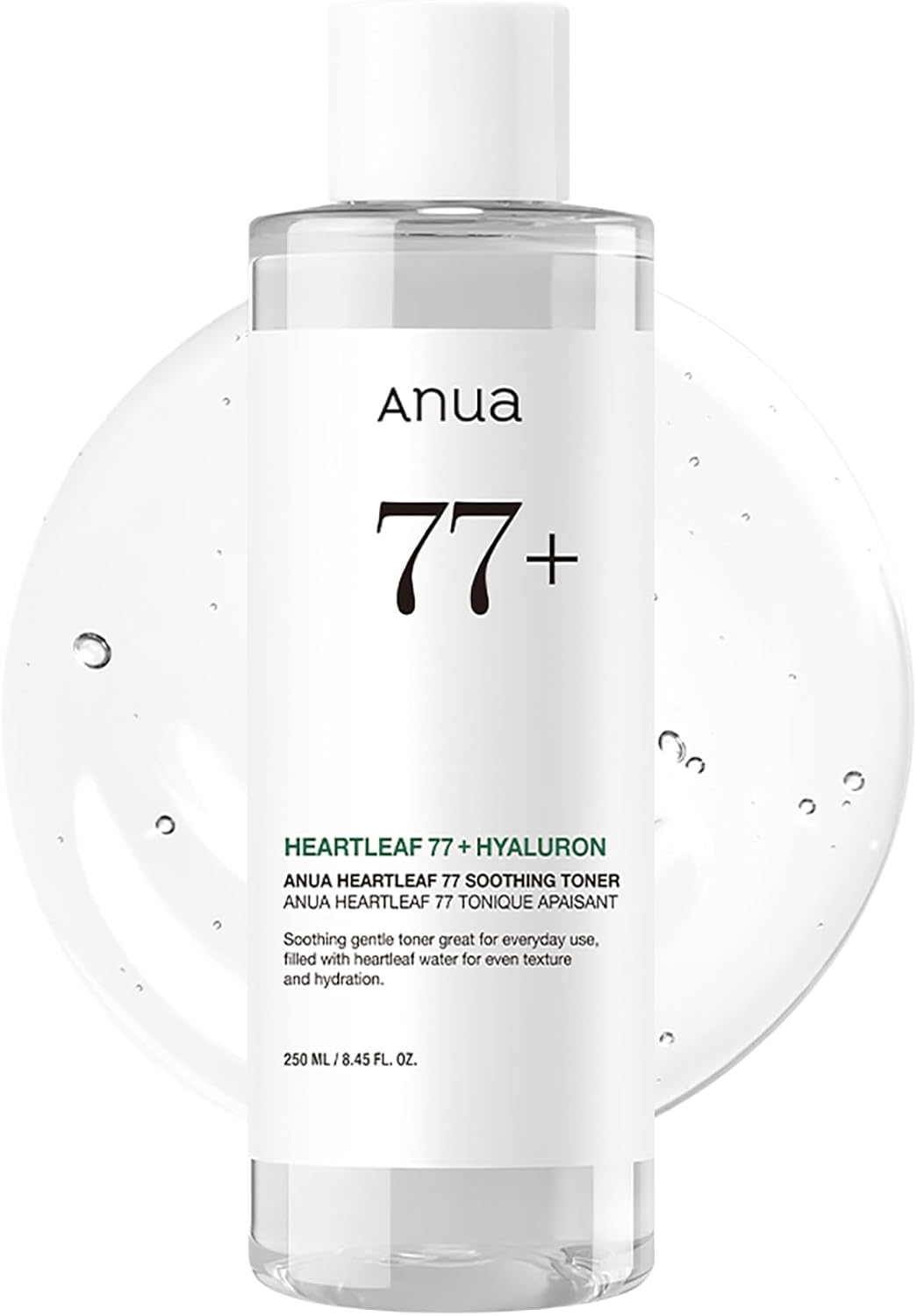
ANUA is a Seoul indie brand, not a legacy K-beauty house. They built their entire product line around one ingredient — Houttuynia cordata, heartleaf — which has been used in Korean herbal medicine for centuries and is clinically documented for anti-inflammatory activity. Their flagship toner pushes that ingredient to 77% concentration, which in K-beauty formulation is genuinely unusual. Most brands use 10–20% and put it in the sub-headline.
But here’s what the Western reviews miss: in Korea, this toner has a specific reputation. It’s not just marketed as a general hydration product. Korean dermatology clinics — particularly the ones in Apgujeong and Sinchon that do laser and chemical peel procedures — specifically recommend this to patients for the week post-treatment. The logic is simple: post-procedure skin is raw and reactive, and you need something that will calm it without any actives that could further stress the barrier. Heartleaf 77 became the answer for that use case first, and the everyday-use version of the brand followed.
That’s the product’s actual origin story in Korea. Not “gentle toner for sensitive skin” (which is how Western reviewers describe it). But “what derma clinics reach for when they want nothing to go wrong.”
4.5 stars, 13,900 Amazon reviews. One of the most-purchased K-beauty items by first-time Western buyers discovering the category. In Olive Young, it’s been a consistent top-seller in the toner section for two years straight — I’ve watched the shelf face count grow.
See the ANUA Heartleaf toner on Amazon →
How ANUA Heartleaf 77 Toner Actually Performs (Real Seoul Scenarios)
I want to give you actual scenes instead of just descriptors, because “gentle” and “calming” tells you nothing you haven’t already read.
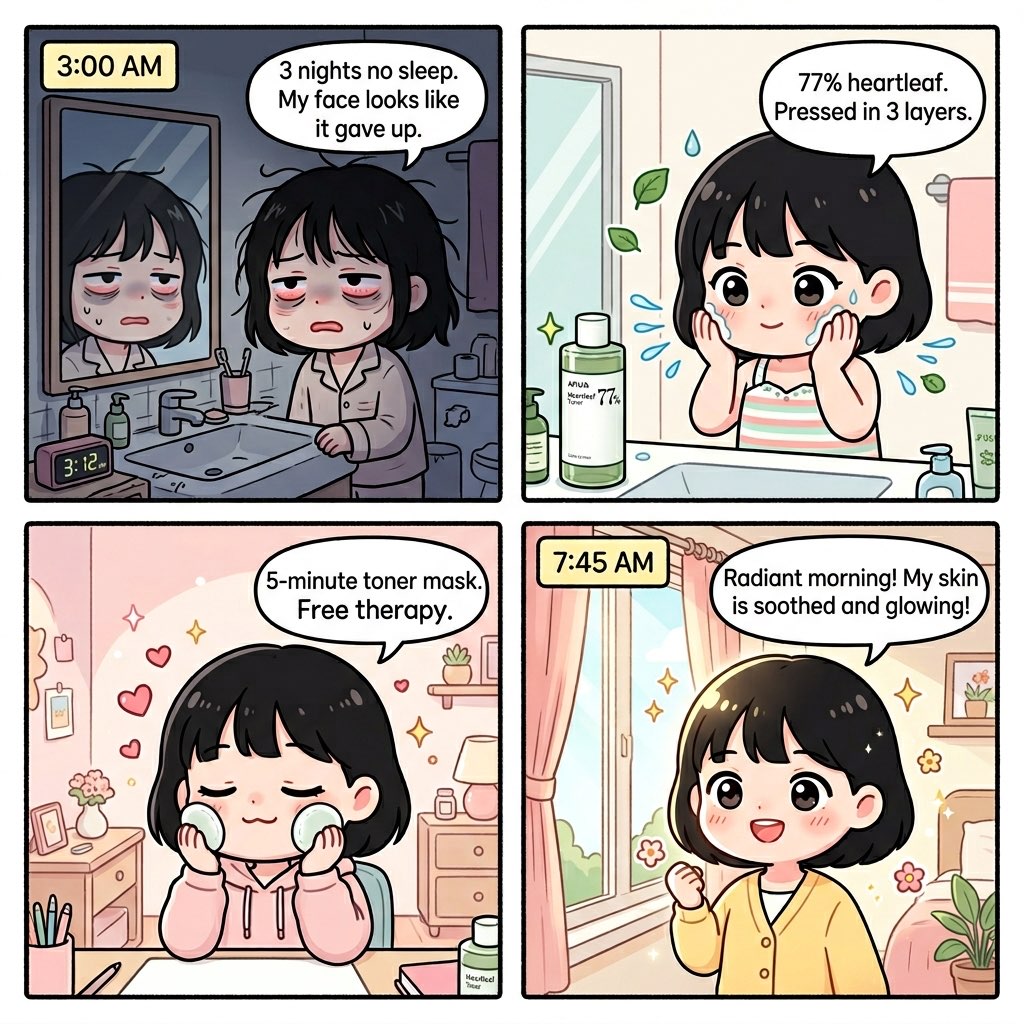
Post-clinic day: I had a light peel done at a clinic in Sinchon. Walked out with my face freshly treated, the cold April wind immediately hitting it, skin feeling tight and thin in that particular post-procedure way. I used this toner that night, three layers, pressed in with my palms. Woke up the next morning with zero redness and a skin surface that felt more intact than it usually does after treatments. That’s the use case this toner was built for, and it delivered exactly on it.
황사 morning: Bad air quality day, combination skin running reactive before I’d even finished washing my face. Applied this right after cleansing while my skin was still slightly damp — one layer, then a second. The cooling effect on contact is immediate and real. Not manufactured menthol. The kind of temperature drop that tells you the formula is actually doing something at the skin surface. By the time I finished the rest of my routine, the redness around my nose had calmed down noticeably.
The all-nighter test: Three consecutive late nights finishing a deadline. Skin visibly stressed by the third morning — dull, slightly reactive at the jawline, looking like I’d been through something. Layered this toner twice, then went straight to work without anything else on top. Two people commented that my skin looked good that day. I have no scientific explanation. But the data point stands.
Layering 2–3 times — the Korean method — works better than a single swipe. Each layer sinks in rather than pooling on the surface, which tells you the formula is genuinely lightweight rather than just claiming to be. The toner mask version (soak two cotton pads, leave 3–5 minutes) is one of the better 5-minute skin resets I’ve tried before a full makeup day.
ANUA Heartleaf Toner Broke Me Out — Purging or Real Reaction?
This is the section I haven’t seen anyone write properly, and it’s the most-asked question in Reddit’s r/SkincareAddiction and r/AsianBeauty threads about this product.
The complaints are real and they show up consistently:
“Started using ANUA and broke out along my jawline after two weeks”
“Skin turned red and itchy after three days — had to stop”
“Expected calming, got more breakouts. Is this purging?”
Here’s what’s actually happening in most of these cases, based on what I know about the formula and Korean skincare community discussions:
It’s usually not purging. Purging is caused by chemical exfoliants that accelerate cell turnover — AHAs, BHAs, retinoids. ANUA Heartleaf 77 has none of these. A true purge from this toner would be chemically implausible.
What’s more likely happening in breakout cases:
- Reaction to the fermented extract — Houttuynia cordata is a fermented plant extract, and a small percentage of people genuinely react to fermented ingredients regardless of how gentle they test. This isn’t the brand’s fault; it’s individual skin biology.
- Cotton pad friction irritation — People who swipe this on with a cotton pad (Western toner application habit) instead of pressing it in with hands can cause surface irritation that mimics a reaction.
- Layering incompatibility — Adding a new product to a multi-step routine makes it hard to isolate which product caused a change. ANUA often gets blamed unfairly when the culprit is something else introduced around the same time.
My honest take: For most sensitive skin types, this toner is genuinely safe. But if you have a history of reacting to fermented ingredients, patch test on your inner arm for three days before applying to your full face. The “calming for everyone” messaging undersells the fact that heartleaf, while anti-inflammatory for most, is still a potent botanical extract that some skin genuinely doesn’t get along with.
In Korea, where this product is most used, the advice you’ll get in Olive Young is: patch test if you’re post-procedure or currently in a breakout phase, apply immediately after cleansing while skin is still slightly damp. That’s the nuance that doesn’t make it into the Western marketing copy.
Buy ANUA Heartleaf 77 toner on Amazon →
ANUA Heartleaf 77 vs COSRX vs Some By Mi: Which K-Beauty Toner Wins?
If you’re choosing between the most popular K-beauty soothing toners right now, here’s how they actually compare.
COSRX AHA/BHA Clarifying Treatment Toner (~$16) is a completely different animal. Low-pH chemical exfoliator — it resurfaces, unclogs, treats. If you want visible pore clearing and are okay with a few days of adjustment, COSRX delivers that. But it’s not a calming toner and it’s not appropriate for reactive or post-procedure skin. Different job, different day.
Some By Mi AHA BHA PHA Toner (~$18) lives in similar territory — exfoliation-forward, texture correction, not designed for sensitive skin. Great for oily skin that needs actives. Wrong choice if your skin is already stressed.
ANUA Heartleaf 77 at ~$29 costs more because it does something specific well: it calms reactive skin without any active ingredients that could further stress it. If your routine already has an exfoliating toner, ANUA is the calming slot. If you’re building a starter K-beauty routine with sensitive skin, ANUA is where to start.
| ANUA Heartleaf 77 | COSRX AHA/BHA | Some By Mi Toner | |
|---|---|---|---|
| Primary function | Soothe + hydrate | Exfoliate + clarify | Exfoliate + brighten |
| Sensitive skin safe | Yes (patch test) | Caution needed | Caution needed |
| Post-procedure safe | Yes | No | No |
| Redness reduction | Strong | Indirect | Indirect |
| Price | ~$29 | ~$16 | ~$18 |
The Honest Downsides of ANUA Heartleaf 77 Toner
If you’re expecting exfoliation, visible pore reduction, or hyperpigmentation fading — it won’t deliver. That’s not what it’s for. A significant portion of the negative reviews come from misaligned expectations: people who wanted a chemical exfoliant and received a hydrating, calming toner instead.
$29 for a toner is a real cost. The premium is the 77% heartleaf concentration and the primary irritation testing — not universally available at lower price points, but worth acknowledging that the cost is higher than comparable hydrating toners.
For oily skin in humid summers, the hydration profile may feel like too much. I’d recommend evening-only use in that case, or swapping to ANUA’s oil-control line during peak humidity season.
Is ANUA Heartleaf 77 Toner Worth $29? Final Verdict
For sensitive and combination-dry skin in a city like Seoul — where air quality, seasonal changes, and heavily heated indoor air creates chronic low-grade skin stress — yes, without hesitation. It does one thing well: calming reactive skin without any actives that could make things worse. The 13,900 Amazon reviews aren’t hype; they’re people finding a product that genuinely works when their skin is struggling.
For oily skin or people wanting actives: this isn’t your toner. Save the $29 for COSRX or a niacinamide serum and use ANUA as a targeted calm-down tool on rough skin days.
I’ve gone through most of a bottle since April started. The backup is already in my cart. For a toner, that’s the answer.
Get ANUA Heartleaf 77 Soothing Toner on Amazon →
ANUA Heartleaf Toner FAQ
What does ANUA Heartleaf toner actually do?
It calms reactive, sensitive skin using 77% Houttuynia cordata (heartleaf) extract with hyaluronic acid for hydration. It reduces redness, supports barrier function, and delivers lightweight moisture. It does not exfoliate or actively treat acne.
Can ANUA Heartleaf toner cause breakouts?
It can for some people — but it’s not purging (there are no actives to cause purging). The more likely cause is a reaction to the fermented heartleaf extract, or friction irritation from cotton pad application. Patch test if your skin is currently reactive or you’ve had fermented ingredient reactions before.
Is the redness or itching normal when starting ANUA Heartleaf toner?
No. Unlike a retinoid or acid that may cause initial adjustment, this toner has no mechanism to cause skin stress. If you experience persistent redness or itching, stop use. It’s a reaction, not purging.
Can I use ANUA Heartleaf toner every day?
Yes. It’s primary-irritation tested and designed for daily use. It’s gentle enough to layer 2–3 times on the same application, which is the Korean method for maximum effect.
Is ANUA Heartleaf toner good for acne-prone skin?
Yes, with a caveat. Anti-inflammatory heartleaf can help calm active breakouts and reduce redness around acne. It won’t treat acne the way BHA would. And as noted above: patch test first if your skin is currently broken out.
Where to buy ANUA Heartleaf 77 toner in the US?
Amazon is the most reliable option with consistent availability. In Seoul, it’s in every Olive Young — usually with a display facing on the toner wall, not buried.
How do I use ANUA Heartleaf toner as a mask?
Soak two cotton pads until fully saturated and leave on your face for 3–5 minutes after cleansing. More targeted than a sheet mask for a quick pre-makeup skin reset. I do this two to three times a week when skin is stressed.
More K-beauty from Seoul: Laneige Lip Sleeping Mask Review · The Saem Triple Pot Concealer · Jung Saem Mool Cushion Review
Hi, I’m Minji — writing from Seoul, where K-beauty isn’t a trend but a daily survival strategy. I test everything in real Korean conditions — fine dust season, post-clinic days, the full chaos — and tell you honestly when things work and when they don’t.